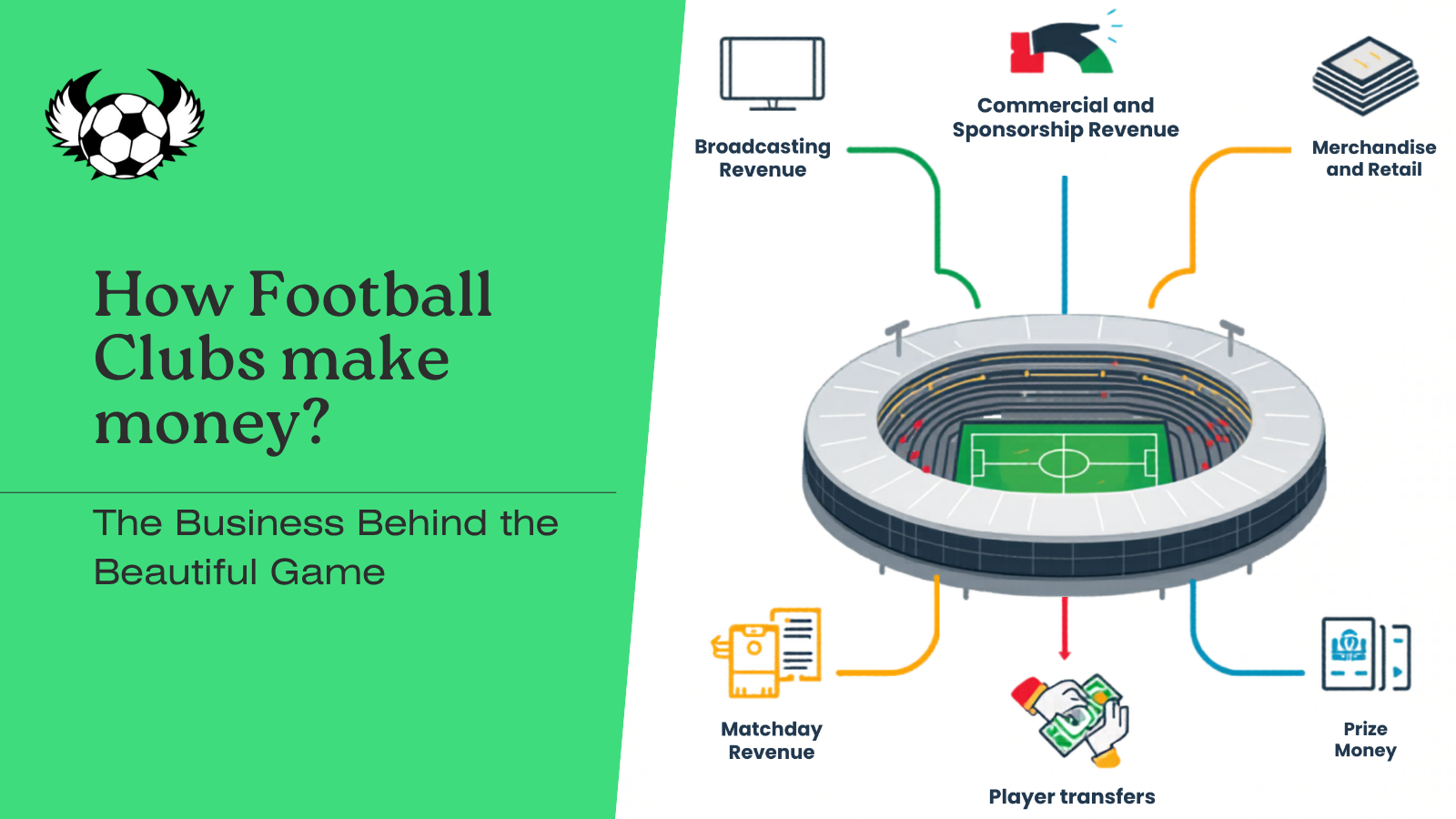
Football clubs spend hundreds of millions on transfer fees, hand out lucrative contracts to superstar players, and invest heavily in stadiums, training facilities, and global marketing campaigns. Yet despite the enormous sums involved, many supporters still ask a simple question: where does all that money come from?
For decades, football was largely a local business. Clubs depended heavily on supporters walking through the turnstiles every weekend. Today, the sport has become a global industry worth billions. Matches are broadcast to hundreds of countries, sponsorship deals stretch across continents, and clubs compete not only for trophies but also for commercial opportunities.
What makes football finance fascinating is that not every club earns money in the same way. A global giant such as Real Madrid generates revenue very differently from a smaller club fighting to remain in the top division. Some clubs rely heavily on television money. Others build their business around player development and transfers. The biggest brands in world football often generate enormous commercial income from supporters who may never attend a match in person.
Understanding how football clubs make money helps explain many of the decisions made away from the pitch. It explains why Champions League qualification is so valuable, why clubs invest heavily in academies, why stadium expansions are often celebrated almost as much as new signings, and why sponsorship announcements receive so much attention.
In this guide, we’ll break down the major revenue streams that drive modern football, explain how clubs earn money, and explore why some clubs generate far more income than others.
Football Revenue at a Glance
Before diving into each revenue stream in detail, here’s a simplified overview of where football clubs typically earn their money.
| Revenue Stream | Importance for Most Top Clubs |
| Broadcasting Revenue | Very High |
| Commercial & Sponsorship Revenue | Very High |
| Matchday Revenue | Medium |
| Merchandise & Retail | Medium |
| Player Transfers | Variable |
| Prize Money | Variable |
| Digital Revenue | Growing Rapidly |
The exact balance varies significantly between clubs.
For example, clubs such as Bayern Munich have historically generated a large proportion of their income through commercial partnerships, while many Premier League clubs depend heavily on broadcasting distributions. Clubs like Brighton and Benfica have built successful models around player trading and development.
One of the biggest misconceptions in football is that ticket sales are the primary source of income. While matchday revenue remains important, broadcasting and commercial partnerships have become far more influential in determining financial strength.
Understanding this revenue mix is the first step to understanding modern football finance.
Football Clubs Are Businesses as Well as Sports Teams
Supporters understandably judge clubs by what happens on the pitch. Wins, trophies, rivalries, and memorable moments are what football is all about.
Behind the scenes, however, every professional club operates as a business.
Even clubs owned by billionaires cannot simply spend money endlessly without considering revenue. Player wages must be paid. Stadiums require maintenance. Training facilities need investment. Staff across departments, from coaches and analysts to marketing teams and security personnel, all contribute to the day-to-day running of the organization.
Modern football clubs often employ hundreds of people beyond the first-team squad. Some of the largest clubs have workforces comparable to major corporations.
Football’s transformation into a global entertainment industry has accelerated this trend. The world’s biggest clubs are no longer simply sporting institutions. They are international brands competing for attention in an increasingly crowded entertainment market.
Consider Real Madrid. The club’s activities extend far beyond football matches. It operates retail stores, digital platforms, hospitality services, commercial partnerships, and international marketing campaigns. According to Deloitte’s Football Money League 2025, Real Madrid became the first football club to surpass €1 billion in annual revenue, highlighting the scale of modern football business operations (Source: Deloitte Football Money League, 2025).
Manchester United offers another example. Even during periods when on-pitch performance has fallen short of expectations, the club has continued to generate significant commercial revenue through its global brand and sponsorship portfolio (Source: Manchester United Annual Report, 2025).
Similarly, Bayern Munich has long been viewed as one of Europe’s best-run clubs financially, combining sporting success with strong commercial partnerships and prudent management (Source: Deloitte Football Money League, 2025).
That raises an interesting question.
Are football clubs actually profitable businesses?
The answer is complicated.
Some clubs generate operating profits in certain years. Others report losses despite earning hundreds of millions in revenue. Unlike many traditional businesses, football clubs often prioritize sporting success over maximizing profit. Owners may accept lower profitability if spending increases the chances of winning trophies or qualifying for lucrative competitions.
This balancing act creates a unique financial environment. Clubs must remain competitive on the pitch while maintaining enough financial stability to survive off it.
Operating costs continue to rise across the game. Transfer fees have exploded. Player wages consume a substantial portion of revenue. Infrastructure projects can cost hundreds of millions. UEFA’s financial sustainability regulations exist largely because football has experienced repeated examples of clubs spending beyond their means (Source: UEFA Club Licensing and Financial Sustainability Regulations, 2025).
As football becomes more commercialized, relying on a single source of income becomes increasingly risky.
A club that depends entirely on ticket sales could suffer if results decline. A club relying solely on player sales may struggle if the transfer market slows down.
That is why successful clubs typically build multiple revenue streams.
Revenue can come from broadcasting deals, commercial partnerships, and matchday income generated by supporters attending games. In addition, many clubs earn money through merchandise sales, digital content, player trading, and competition prize funds.
The clubs that thrive financially are increasingly those that operate as global brands rather than simply successful football teams.
That reality leads directly to the most important revenue source in modern football.
Broadcasting Revenue: The Financial Lifeblood of Modern Football
If there is one revenue stream that transformed football from a popular sport into a multi-billion-dollar industry, it is broadcasting.

Television money has fundamentally changed the economics of football.
The sport’s global popularity means broadcasters are willing to pay enormous sums for the right to show matches. Those payments have helped fuel rising transfer fees, increasing wages, and the financial growth of leagues around the world.
For many clubs, television income is now their single largest source of revenue.
In some cases, broadcasting income exceeds matchday revenue several times over.
The financial dominance of the Premier League offers perhaps the clearest example.
The league’s domestic and international broadcasting agreements are worth billions of pounds across multi-year cycles, making English football one of the most lucrative sports properties in the world (Source: Premier League Annual Report, 2025).
This broadcasting power helps explain why even mid-table Premier League clubs can often spend more aggressively in the transfer market than clubs competing near the top of other European leagues.
How Television Rights Work
The process begins when leagues and competitions sell broadcasting rights.
Broadcasters such as Sky Sports, TNT Sports, Amazon Prime Video, and international networks bid for the right to show matches. These agreements often cover multiple seasons and can be worth billions.
Once rights are sold, the revenue is distributed among participating clubs according to predetermined formulas.
The Premier League uses a relatively balanced distribution model compared with many other leagues. While clubs receive varying amounts depending on performance and television appearances, every club benefits from substantial central distributions (Source: Premier League Annual Report, 2025).
This model has contributed significantly to the league’s competitive strength.
A club finishing 17th in the Premier League can often earn more broadcasting revenue than champions in several other European leagues. That financial advantage helps English clubs compete aggressively for players and coaching talent.
Domestic television rights are only part of the picture.
International broadcasting rights have become increasingly valuable as football’s global audience expands.
Premier League matches are watched across Asia, Africa, North America, South America, and the Middle East. International rights agreements now generate billions in additional revenue and continue to grow as football’s worldwide popularity increases (Source: Premier League Annual Report, 2025).
The same principle applies to UEFA competitions.
The Champions League has evolved into one of the most commercially valuable tournaments in world sport. UEFA distributes substantial broadcasting and commercial revenues to participating clubs through a system of participation fees, performance bonuses, and value-pillar payments (Source: UEFA Champions League Revenue Distribution System, 2025).
For many clubs, simply qualifying for the Champions League can transform an entire season financially.
A strong European campaign may generate tens of millions of euros in additional income before ticket sales and secondary commercial benefits are even considered.
Why Bigger Clubs Often Earn More
Not all television revenue is distributed equally.
League position often affects final payouts.
Higher finishes typically result in greater merit payments, rewarding clubs for sporting success.
Television appearance fees can also play a role. Clubs selected more frequently for live broadcasts often receive additional revenue.
European qualification creates an even bigger financial divide.
The gap between Champions League participation and Europa League participation can be enormous.
Champions League clubs benefit not only from larger UEFA distributions but also from increased sponsorship exposure, stronger global visibility, and higher-profile fixtures.
This is one reason finishing fourth instead of fifth in a domestic league can be worth far more than a single place in the table might suggest.
Qualification often triggers a chain reaction of financial benefits.
More television revenue.
More prize money.
More sponsorship opportunities.
More matchday income.
Greater global exposure.
Missing out on Europe can have the opposite effect.
Many clubs build budgets expecting continental football. Failure to qualify may force changes in transfer strategy, player recruitment, or wage spending.
This financial pressure explains why the race for European places has become almost as significant as title races themselves.
For supporters, a Champions League anthem before kickoff represents prestige.
For club executives, it often represents millions in additional revenue.
And that is precisely why broadcasting remains the financial engine powering modern football.
Matchday Revenue: Turning Fans Into Income
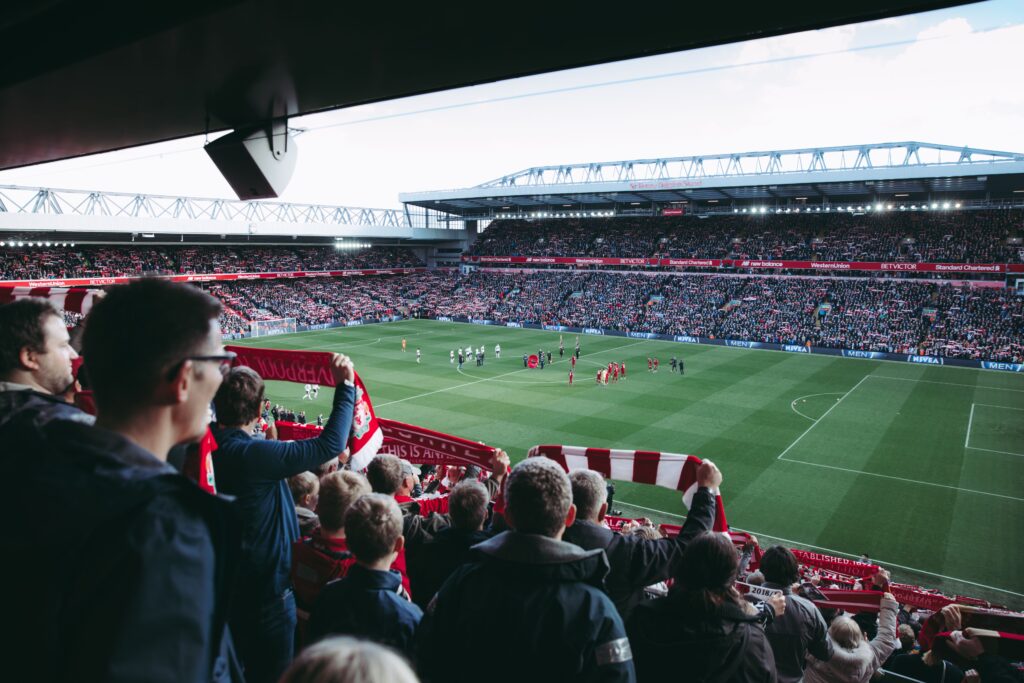
For many supporters, football’s financial story seems straightforward.
Thousands of fans buy tickets, fill stadiums every weekend, purchase food and drinks, and spend money in club stores. Surely that must be where most of the money comes from.
That assumption would have been much closer to reality a few decades ago.
Today, matchday revenue remains a crucial part of club finances, but for most elite clubs it sits behind broadcasting and commercial income. Even so, clubs continue investing heavily in stadium expansions, hospitality facilities, and fan experiences because matchday income remains one of the few revenue streams they can directly influence.
Unlike broadcasting deals negotiated collectively by leagues, stadium revenue is largely controlled by the club itself.
Every additional seat, premium hospitality package, or non-football event can increase earnings.
That is why modern stadiums are no longer designed solely for football. They are business assets intended to generate revenue throughout the year.
Ticket Sales
The most obvious source of matchday income is ticket sales.
Every home fixture creates an opportunity for clubs to generate revenue from supporters attending matches. The amount earned depends on several factors, including stadium capacity, ticket pricing, demand, and the number of home games played each season.
For elite clubs, season tickets form the foundation of ticket revenue.
Thousands of supporters commit to attending every home league match, providing clubs with guaranteed income before the season even begins.
General admission tickets then supplement that revenue. High-profile fixtures often command premium prices due to increased demand.
A Champions League knockout match against a European giant will usually generate far more ticket income than an early-round domestic cup fixture.
Stadium size also plays a major role.
A club playing in front of 75,000 supporters naturally has greater earning potential than a club with a 20,000-seat stadium.
This helps explain why stadium development projects have become increasingly important.
Arsenal’s move from Highbury to the 60,000-capacity Emirates Stadium dramatically increased the club’s matchday earning potential (Source: Arsenal Financial Reports).
Similarly, Tottenham Hotspur’s new stadium was designed not only to improve the fan experience but also to maximize long-term revenue opportunities through additional seating, premium areas, and year-round events (Source: Tottenham Hotspur Annual Reports).
The difference can be substantial.
According to Deloitte’s Football Money League, some of Europe’s biggest clubs generate well over €100 million annually from matchday activities alone (Source: Deloitte Football Money League, 2025).
Yet even these impressive figures often remain below broadcasting and commercial revenues.
That reality highlights one of football’s biggest financial misconceptions.
Packed stadiums may create the most visible source of income, but they are rarely the largest.
Hospitality and VIP Experiences
If standard tickets are important, hospitality is where many clubs significantly increase profitability.
Corporate boxes, executive lounges, premium seating, and VIP experiences generate some of the highest-margin revenue in football.
Businesses are often willing to pay substantial sums for access to premium facilities, networking opportunities, and exclusive matchday experiences.
A hospitality guest may generate several times more revenue than a standard ticket holder.
This is one reason why modern stadium developments frequently dedicate significant space to premium offerings.
Luxury suites.
Private dining areas.
Executive clubs.
Pitch-side experiences.
Behind-the-scenes access.
These features are not simply designed to impress visitors. They are revenue generators.
The modern stadium business model increasingly resembles sectors such as hospitality, entertainment, and tourism.
Tottenham Hotspur Stadium is a good example.
The venue was built with hospitality and corporate entertainment in mind. Premium experiences form a significant component of the club’s long-term financial strategy (Source: Tottenham Hotspur Financial Reports).
The same approach can be seen across Europe.
Whether at Old Trafford, the Allianz Arena, or Santiago Bernabéu, clubs increasingly seek to maximize the value of every visitor rather than simply increasing attendance numbers.
A supporter paying £50 for a ticket contributes revenue.
A corporate guest paying several hundred pounds for a premium package contributes far more.
That difference explains why clubs continue expanding hospitality offerings even when stadiums are already selling out.
Food, Beverage and Stadium Spending
The financial opportunity does not end once supporters enter the stadium.
Every fan attending a match becomes a potential customer.
Food and beverage sales contribute an additional stream of income on matchdays.
Supporters purchase meals, drinks, snacks, and refreshments before kickoff, during halftime, and after matches.
While the spending of an individual fan may appear relatively small, the numbers become significant when multiplied across tens of thousands of attendees over an entire season.
Many clubs also operate merchandise kiosks throughout stadium concourses.
Matchday visitors frequently purchase scarves, shirts, programs, and souvenirs.
Special occasions such as cup finals, title celebrations, or derby matches often lead to increased spending.
Some modern stadiums are specifically designed to encourage longer visits.
Clubs want supporters arriving earlier and staying later because additional time spent at the venue often leads to additional spending.
This thinking extends beyond football itself.
Concerts.
NFL games.
Corporate events.
Conferences.
Stadium tours.
Museums.
These activities generate revenue even when no football is being played.
Real Madrid’s redevelopment of the Santiago Bernabéu reflects this trend. The project was designed not only to improve matchday experiences but also to create a multi-purpose entertainment venue capable of generating income throughout the year (Source: Real Madrid Annual Report, 2025).
A modern stadium is no longer just a venue for football.
It is a year-round business asset.
Sponsorships and Commercial Partnerships
A club may have millions of supporters who never buy a ticket.
They may never visit the stadium.
They may never even watch a match in person.
Yet those supporters still create enormous financial value.
Why?
Because brands want access to them.
Football’s global audience has transformed clubs into powerful marketing platforms. Sponsorships and commercial partnerships now represent one of the most important revenue streams in the sport.
For many of the world’s biggest clubs, commercial revenue rivals or even exceeds broadcasting income.
The largest clubs are not simply selling football.
They are selling visibility, influence, credibility, and access to global audiences.
Shirt Sponsorships
Few sponsorship opportunities in sport offer the visibility of a football shirt.
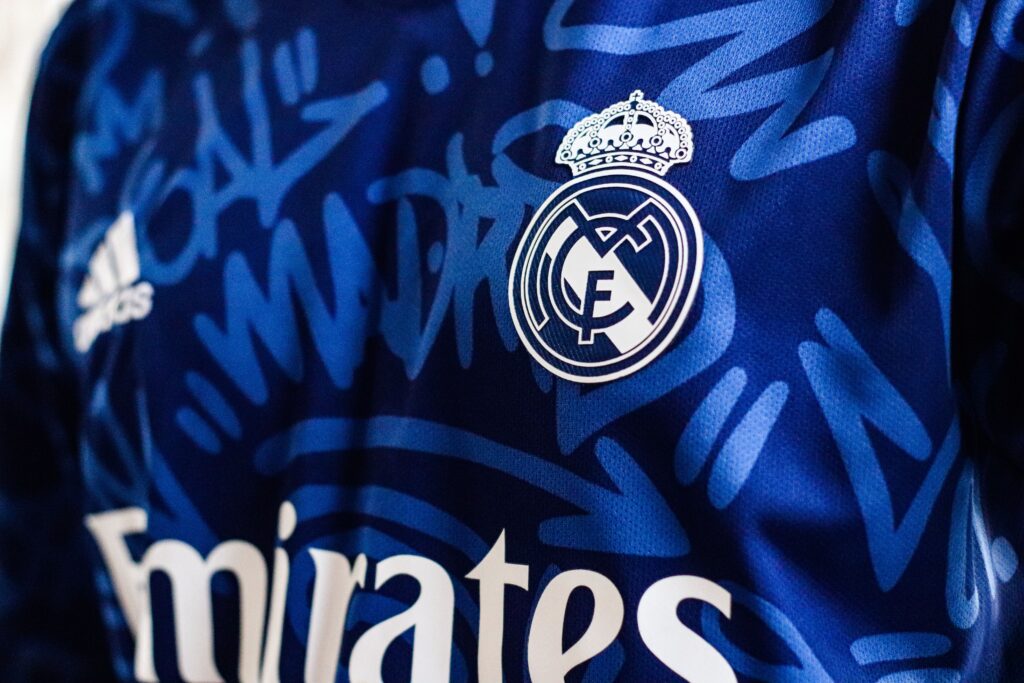
Whether during televised matches, social media campaigns, newspaper coverage, or highlight packages, a sponsor’s logo is consistently displayed alongside the club’s identity. This level of exposure helps explain why shirt sponsorship agreements are often worth tens of millions annually.
As a result, many modern clubs maintain multiple shirt-related partnerships to maximize commercial revenue.
Front-of-Shirt Sponsors
This is usually the most valuable sponsorship position.
Major brands pay substantial fees to secure this prime real estate because it receives maximum exposure.
Some of the largest agreements in football are worth tens of millions of pounds per season (Source: SportBusiness Sponsorship Reports, 2025).
Sleeve Sponsors
Introduced more recently in many leagues, sleeve sponsorships provide an additional commercial opportunity without replacing the main shirt sponsor.
Training Kit Sponsors
Training gear receives significant exposure through social media, interviews, training videos, and pre-match content.
As clubs produce more digital content, training kit sponsorships have become increasingly valuable.
Sponsors are willing to invest because football provides something traditional advertising often struggles to achieve: emotional engagement.
Supporters form strong connections with clubs.
Brands seek to benefit from those connections.
Stadium Naming Rights
Not every stadium carries a corporate name, but naming-rights agreements have become an increasingly important source of revenue.
These deals allow companies to place their brand at the heart of a club’s identity for an extended period.
Two of the most famous examples are:
- Emirates Stadium
- Allianz Arena
In both cases, long-term partnerships provide clubs with substantial commercial income while giving sponsors continuous brand exposure.
Naming-rights agreements are often worth tens or even hundreds of millions over the life of the contract.
Of course, not every supporter embraces the idea.
Traditionalists sometimes prefer historic stadium names.
Yet from a financial perspective, these partnerships can provide stable long-term revenue that supports investment elsewhere.
The question for clubs is simple.
If a naming-rights agreement helps fund infrastructure improvements, player recruitment, or long-term stability, many executives view it as a worthwhile trade-off.
Global Brand Partnerships
The biggest commercial growth area in modern football may not be shirt sponsors or stadium naming rights.
It is global partnerships.
Large clubs now maintain extensive sponsorship portfolios that stretch across multiple continents.
Technology companies.
Airlines.
Financial institutions.
Automotive manufacturers.
Consumer electronics brands.
Food and beverage companies.
The list is extensive.
Many clubs have regional sponsorship agreements tailored to specific markets.
A partner in Asia.
Another in North America.
Another in the Middle East.
Each agreement targets a different audience while generating additional revenue.
Manchester United became one of the pioneers of this model during its commercial expansion under former chief executive David Gill and later Ed Woodward. The club built a vast network of global partners covering multiple industries and geographic regions (Source: Manchester United Annual Reports).
Other clubs soon followed.
Today, major football clubs often resemble multinational corporations as much as sports teams.
Football’s worldwide audience makes this possible.
A club with hundreds of millions of followers across television, social media, and digital platforms offers sponsors unparalleled reach.
That is why commercial departments have become increasingly important within modern football organizations.
Success on the pitch remains vital.
But the ability to monetize popularity off the pitch can be equally valuable.
The clubs generating the most revenue today are often those that have successfully turned sporting success into commercial power.
And that commercial power extends beyond sponsorships into another major revenue stream: merchandise and retail sales.
Merchandise and Retail Sales
Walk through almost any major city in the world and you’ll see football shirts being worn far from their club’s home stadium.
A Real Madrid jersey in Mumbai.
A Liverpool shirt in New York.
A Barcelona kit in Jakarta.
That global visibility isn’t just evidence of popularity. It’s also a business opportunity.
Merchandise and retail sales have become an important part of modern football finances, particularly for clubs with large international fanbases. While retail income rarely matches broadcasting or major commercial partnerships, it remains a valuable revenue stream that strengthens both finances and brand recognition.
Perhaps more importantly, merchandise creates a direct financial relationship between clubs and supporters.
Every shirt purchased represents both revenue and fan engagement.
Replica Shirts
Replica shirts dominate football merchandise sales.
Each season, clubs release home, away, and often third kits designed not only for sporting purposes but also for commercial success.
The biggest clubs sell millions of shirts annually across global markets.
Clubs such as Real Madrid, Barcelona, Liverpool, Manchester United, and Bayern Munich consistently rank among the world’s top-selling football brands (Source: Euromericas Sport Marketing Reports, 2025).
However, one of the biggest myths in football finance is that clubs keep all the money generated by shirt sales.
The reality is far more complicated.
Do Clubs Keep All Shirt Sale Revenue?
In most cases, no.
Football shirts are typically produced by kit manufacturers such as Adidas, Nike, Puma, or other sportswear companies.
Revenue is then divided according to contractual agreements.
A typical arrangement may include:
- Guaranteed annual payments
- Royalties based on sales
- Performance bonuses
- Licensing fees
The exact terms vary significantly from club to club.
For elite clubs, long-term kit supply agreements can themselves be worth hundreds of millions over several years.
For example, major kit deals signed by clubs such as Real Madrid, Manchester United, and Barcelona rank among the most lucrative partnerships in world sport (Source: Club Financial Reports and Sports Business Journal, 2025).
This means a club benefits from merchandise in multiple ways:
- Direct retail profits.
- Licensing revenue.
- Kit supplier payments.
- Increased global brand exposure.
That final point is often overlooked.
Every supporter wearing a club shirt effectively becomes a walking advertisement.
The commercial value extends well beyond the initial purchase.
Beyond Shirts
Modern football merchandising extends far beyond replica kits.
Clubs now sell:
- Scarves
- Hats
- Jackets
- Training wear
- Lifestyle apparel
- Children’s products
- Collectibles
- Homeware
- Gaming accessories
Many supporters purchase products even when they have no intention of attending a match.
For clubs, this creates revenue opportunities independent of stadium attendance.
The strongest football brands increasingly resemble lifestyle brands.
Supporters are buying identity as much as they are buying products.
Club Stores and E-Commerce

The rise of e-commerce has transformed football retail.
Historically, merchandise sales were concentrated around stadium stores and local markets.
Today, clubs can sell products directly to supporters almost anywhere in the world.
Official online stores operate around the clock.
International shipping networks allow clubs to reach markets that were previously inaccessible.
This shift has been particularly important for clubs with large overseas fanbases.
A supporter in India, Indonesia, Nigeria, or the United States can now purchase official merchandise with just a few clicks.
That would have been far more difficult two decades ago.
Digital retail also provides clubs with valuable customer data.
Clubs can analyze purchasing behavior, personalize marketing campaigns, and build stronger relationships with supporters.
The growth of global e-commerce has reinforced an important reality of modern football.
A fan does not need to attend matches to contribute financially.
As football’s international reach continues expanding, retail and merchandise revenue are likely to remain an important component of the overall business model.
Player Transfers: Buying, Developing and Selling Talent
Transfers are usually discussed as expenses.
Supporters focus on how much their club spent during the summer window.
Media headlines highlight transfer fees, wages, and release clauses.
Yet transfers can also generate significant income.
For some clubs, player trading is one of the most important revenue streams available.
In fact, entire business models have been built around identifying talent, developing players, and selling them at a profit.
How Transfer Profits Work
The basic concept is simple.
Buy low.
Develop.
Sell high.
The execution, of course, is much more difficult.
Successful player-trading clubs combine recruitment expertise, coaching quality, and long-term planning.
Few clubs illustrate this better than Benfica.
The Portuguese giants have repeatedly signed promising young players, developed them, and sold them for substantial fees.
Examples include:
- João Félix
- Enzo Fernández
- Darwin Núñez
- Rúben Dias
Transfer income has become a central pillar of Benfica’s financial strategy (Source: Benfica Annual Reports).
Borussia Dortmund have followed a similar model.
The German club has earned significant profits through the development and sale of players such as:
- Ousmane Dembélé
- Jadon Sancho
- Jude Bellingham
- Erling Haaland
Brighton & Hove Albion provide a more recent Premier League example.
The club’s recruitment network has identified undervalued talent before selling players for substantial profits.
Sales involving Moisés Caicedo, Alexis Mac Allister, and others have generated major returns while allowing the club to remain competitive (Source: Brighton Financial Reports).
Why Do Some Clubs Sell Their Best Players?
Supporters often view player sales as a sign of weakness.
Financially, however, selling can be a rational strategy.
A club may receive a transfer fee large enough to:
- Strengthen multiple positions.
- Improve infrastructure.
- Reduce debt.
- Fund future recruitment.
For clubs outside football’s financial elite, player trading can be essential for long-term sustainability.
Sometimes selling one star player creates opportunities that benefit the entire organization.
Understanding Amortisation
One of the most misunderstood concepts in football finance is amortisation.
When a club pays £60 million for a player on a five-year contract, that £60 million is not usually recorded as a single expense immediately.
Instead, the transfer cost is spread across the length of the contract for accounting purposes (Source: UEFA Club Licensing and Financial Sustainability Regulations, 2025).
A £60 million transfer on a five-year deal would typically create an annual amortisation charge of £12 million.
This accounting treatment explains why clubs can spend large sums in transfer windows while reporting very different financial results.
It is also one reason why long contracts have become increasingly common in modern football.
Understanding amortisation provides important context when evaluating transfer spending.
The headline fee rarely tells the entire financial story.
Academy Graduates as Financial Assets
Few assets in football are more valuable than successful academy graduates.
Developing players internally offers benefits that extend beyond sporting performance.
Academy graduates can save clubs millions in recruitment costs.
More importantly, if they are sold, the accounting treatment is highly advantageous.
Because homegrown players were developed internally rather than purchased through transfers, transfer fees received for academy graduates are often recorded as pure profit from an accounting perspective (Source: UEFA Financial Sustainability Guidance, 2025).
This makes academy development particularly attractive financially.
Recent examples include:
- Mason Mount (Chelsea)
- Cole Palmer before his move from Manchester City
- Kobbie Mainoo’s emergence at Manchester United
- Bukayo Saka at Arsenal
Even when academy graduates are not sold, they can provide exceptional value by contributing to the first team at relatively low development costs compared to expensive external signings.
Why Academies Matter More Than Ever
Academies offer clubs several advantages:
- Reduced transfer spending.
- Potential future transfer profits.
- Stronger club identity.
- Compliance with squad registration rules.
- Long-term sustainability.
For many clubs, academies represent one of the most efficient investments available.
A single successful graduate can justify years of development costs.
That is why clubs continue investing heavily in youth recruitment, coaching, scouting, and training facilities.
The rewards can be enormous both on and off the pitch.
Prize Money and Competition Earnings
Winning trophies brings prestige.
It also brings money.
Prize distributions have become an increasingly important component of football finances, particularly for clubs competing at the highest levels.
While prize money rarely matches broadcasting or commercial revenue over the long term, success in major competitions can provide substantial financial rewards.
In some cases, qualification alone is worth millions.
Domestic Competitions
Every league and cup competition distributes prize money differently.
In the Premier League, clubs receive merit payments based on final league position in addition to central revenue distributions (Source: Premier League Annual Reports).
The higher a club finishes, the larger its share of available funds.
Domestic cup competitions also offer financial rewards.
Examples include:
- FA Cup
- EFL Cup
- Copa del Rey
- DFB-Pokal
- Coppa Italia
Prize funds vary by competition, but deep cup runs often generate valuable additional income.
There are also secondary benefits.
Successful teams attract greater media attention, larger crowds, stronger sponsorship opportunities, and increased merchandise sales.
The financial value of winning often extends beyond official prize distributions.
European Competitions
This is where the numbers become truly significant.
Qualification for UEFA competitions can dramatically alter a club’s finances.
The Champions League is particularly valuable.
Participating clubs receive income from:
- Participation payments.
- Match performance bonuses.
- Progression bonuses.
- Value-pillar distributions.
- Additional commercial opportunities.
According to UEFA’s revenue distribution system, clubs can earn tens of millions of euros simply through participation and successful performances (Source: UEFA Champions League Revenue Distribution System, 2025).
Why Champions League Qualification Matters So Much
For many clubs, Champions League qualification is the single most important financial objective outside winning domestic titles.
The benefits extend far beyond UEFA payments.
Qualification often leads to:
- Increased sponsorship value.
- Higher matchday revenue.
- Greater global exposure.
- Stronger player recruitment appeal.
- Improved commercial opportunities.
This creates a powerful cycle.
Success generates revenue.
Revenue supports investment.
Investment increases the likelihood of future success.
Missing out on the Champions League can have the opposite effect.
Budgets may need adjusting.
Transfer plans may change.
Commercial projections may fall short.
This is why finishing fourth rather than fifth can have enormous consequences.
The sporting difference may appear small.
The financial difference often is not.
Europa League, Conference League and Club World Cup
While the Champions League remains the most lucrative competition, other tournaments also provide meaningful income.
The Europa League and Conference League offer participation and performance payments, though generally at lower levels than the Champions League (Source: UEFA Financial Reports, 2025).
The expanded FIFA Club World Cup may also become increasingly important financially.
With larger prize pools and greater commercial opportunities, the competition has the potential to create another major revenue stream for elite clubs (Source: FIFA Competition Announcements, 2025).
Football’s biggest competitions are no longer solely sporting events.
They are major business opportunities.
And as football continues evolving, clubs are finding new ways to generate revenue beyond traditional competitions and merchandise.
That evolution is particularly visible in the digital world.
The Growing Importance of Digital Revenue
Twenty years ago, a football club’s relationship with supporters was largely limited to matchdays, television broadcasts, and the occasional newspaper interview.
Today, clubs communicate with supporters every hour of every day.
Social media, streaming platforms, mobile applications, membership programs, and digital content have transformed how clubs engage with fans. More importantly, they have created new revenue opportunities that barely existed a generation ago.
Digital revenue still represents a smaller proportion of income than broadcasting or commercial partnerships for most clubs, but its importance continues to grow.
Social Media and Fan Engagement
A club’s digital audience has become a valuable commercial asset.
The world’s biggest clubs attract hundreds of millions of followers across social media platforms, creating audiences that rival major media companies.
Real Madrid, Barcelona, Manchester United, Liverpool, and other global brands maintain enormous online communities that stretch across every continent.
Those audiences create value in several ways.
Sponsors increasingly evaluate digital reach when negotiating commercial agreements.
A shirt sponsor is not only paying for exposure during matches. They are also paying for visibility across Instagram, X, TikTok, YouTube, Facebook, and other digital platforms.
Every post, video, interview, and behind-the-scenes feature becomes additional sponsor inventory.
This helps explain why clubs invest heavily in digital media teams.
Social media itself may not always generate direct income, but it strengthens commercial opportunities that do.
In modern football, attention has become a valuable currency.
Streaming, Content and Membership Programs
Clubs are increasingly behaving like media companies.
Many now produce documentaries, exclusive interviews, training footage, tactical analysis, and behind-the-scenes content designed specifically for digital audiences.
Club-owned media platforms have become increasingly common.
Examples include:
- MUTV
- Barça One
- Liverpool FC TV
- Real Madrid TV
These platforms allow clubs to engage supporters directly without relying entirely on traditional broadcasters.
Subscription-based memberships also provide recurring revenue opportunities.
Supporters may pay for:
- Exclusive content
- Early ticket access
- Premium experiences
- Digital memberships
- Interactive fan communities
While individual payments may appear modest, the scale of global fanbases means these programs can generate meaningful income.
Digital transformation has also helped clubs better understand their supporters through data collection and analytics.
Knowing who your fans are, where they live, and what they engage with makes commercial partnerships significantly more valuable.
Football clubs increasingly operate not only as sports organizations but also as media and entertainment companies.
That trend is unlikely to slow down.
Why Some Clubs Make More Money Than Others
Not all football clubs operate on a level financial playing field.
Some clubs generate over €1 billion annually.
Others struggle to reach a fraction of that figure.
The gap cannot be explained by ticket sales alone.
Several factors determine why certain clubs consistently outperform others financially.
Global Fanbase Size
Perhaps the biggest advantage in modern football is global popularity.
A club with millions of supporters spread across multiple continents has access to opportunities unavailable to smaller rivals.
Consider clubs such as Manchester United, Real Madrid, and Barcelona.
Their supporters live across Europe, Asia, Africa, North America, South America, and the Middle East.
That global reach creates enormous commercial potential.
Sponsors pay more.
Merchandise sales increase.
Digital audiences grow.
International tours become more profitable.
Every additional supporter represents potential long-term revenue.
This is one reason football’s biggest clubs invest heavily in global marketing efforts.
Growing the fanbase is not simply about popularity.
It is about expanding future revenue opportunities.
Consistent Success
Success remains one of football’s most valuable assets.
Winning trophies generates financial rewards directly through prize money, but the impact extends much further.
Successful clubs typically benefit from:
- Greater broadcasting income.
- Increased sponsorship value.
- Higher merchandise sales.
- Stronger global recognition.
- Regular European qualification.
The relationship between money and success is complex.
Does financial power create sporting success?
Or does sporting success create financial power?
The reality is usually a combination of both.
Success attracts revenue.
Revenue enables investment.
Investment increases the chances of future success.
This cycle helps explain why certain clubs remain near the top of football’s financial rankings year after year.
One of football’s defining financial realities is that sustained success often compounds over time.
A club that qualifies regularly for the Champions League gains advantages that extend far beyond a single season.
Why Many Football Clubs Still Lose Money
If football clubs generate so much revenue, why do so many report losses?
It is one of the most common questions in football finance.
The answer is simple.
Revenue has increased dramatically.
Costs have increased too.
In many cases, they have increased just as quickly.
Player Wages
The largest expense for most football clubs is wages.
According to UEFA financial reports, player and staff salaries typically represent the biggest cost category across professional football (Source: UEFA European Club Finance and Investment Landscape Report, 2025).
Competition for elite talent drives wages upward.
When rival clubs offer larger contracts, others often feel pressure to respond.
This creates an environment where payroll expenses can consume a significant proportion of revenue.
Football’s wage race is relentless.
The more money enters the sport, the more clubs are willing to spend to gain a competitive edge.
Transfer Spending
Transfer fees represent another major financial commitment.
Although amortisation spreads costs across contracts, clubs still commit substantial resources to recruitment.
A failed transfer can have consequences for years.
High wages.
Amortisation costs.
Reduced resale value.
Recruitment mistakes often become expensive lessons.
Infrastructure Costs
Elite clubs must continually invest in facilities.
Training grounds.
Youth academies.
Sports science departments.
Stadium upgrades.
Technology systems.
Medical facilities.
These investments can improve competitiveness but also require substantial financial resources.
Real Madrid’s redevelopment of the Santiago Bernabéu and Tottenham Hotspur’s construction of a new stadium demonstrate the scale of modern infrastructure projects (Source: Club Annual Reports).
Such investments may generate long-term benefits but often involve significant short-term costs.
Debt Servicing
Many clubs carry debt.
Loans may be used to finance stadium projects, acquisitions, infrastructure improvements, or other investments.
Debt itself is not necessarily a problem.
Many successful businesses use borrowing strategically.
The challenge arises when repayment obligations become difficult to manage.
Interest costs can place additional pressure on finances, particularly if sporting performance declines.
The Barcelona Example
Few examples illustrate football’s financial challenges better than Barcelona’s well-documented struggles during the early 2020s.
Despite being one of the world’s most successful and recognizable clubs, Barcelona faced significant financial difficulties linked to high wage commitments, debt obligations, and broader financial pressures (Source: Barcelona Annual Reports; Deloitte Football Money League, 2025).
The situation served as a reminder that even football’s biggest brands are not immune to financial risk.
Revenue alone does not guarantee stability.
Managing costs is equally important.
This is precisely why UEFA introduced financial sustainability regulations.
Generating revenue matters.
Controlling expenditure matters just as much.
The Future of Football Club Revenue
Football’s business model continues to evolve.
The next decade is likely to bring new opportunities, new technologies, and new challenges.
While traditional revenue streams will remain important, clubs are already exploring additional ways to generate income.
Global Expansion
Football’s growth opportunities increasingly lie beyond traditional markets.
International tours have become major commercial events.
Pre-season matches in the United States, Asia, and the Middle East allow clubs to connect directly with overseas supporters.
These tours generate:
- Match revenue.
- Sponsorship exposure.
- Merchandise sales.
- Media attention.
As football’s global audience continues growing, international markets will become even more important.
Technology and Fan Experiences
Technology is reshaping supporter engagement.
Digital memberships.
Personalized content.
Interactive experiences.
Mobile applications.
Artificial intelligence.
Data-driven marketing.
Clubs are investing heavily in technologies that strengthen relationships with supporters while creating additional commercial opportunities.
The future supporter experience may look very different from today’s.
New Competitions and Revenue Streams
Football’s competition landscape continues changing.
The expanded FIFA Club World Cup represents one example of how governing bodies are seeking to create new commercial opportunities.
Additional tournaments mean:
- More broadcasting revenue.
- More sponsorship opportunities.
- Greater global exposure.
- Increased prize money.
Not everyone agrees with football’s growing calendar.
Player welfare concerns remain significant.
Yet from a financial perspective, new competitions create additional earning opportunities.
Multi-club ownership groups such as City Football Group, Red Bull, and INEOS-backed projects also demonstrate how football business models continue evolving.
The sport’s financial future will likely involve greater globalization, increased digital engagement, and new forms of commercial activity.
The clubs that adapt most effectively may gain significant competitive advantages.
Conclusion
Football clubs make money through a combination of revenue streams rather than a single source of income. Broadcasting rights, commercial partnerships, sponsorships, matchday revenue, merchandise sales, player transfers, prize money, and digital activities all contribute to the financial ecosystem that supports modern football.
The game has undergone a remarkable transformation over the past few decades. What was once a largely local sport supported primarily by ticket sales has become a global entertainment industry worth billions. Clubs now compete not only for trophies but also for audiences, sponsors, commercial partners, and worldwide attention.
One of the biggest misconceptions in football is that ticket sales remain the primary driver of club revenue. In reality, modern football clubs increasingly operate as global media and entertainment brands, with broadcasting and commercial partnerships often dwarfing matchday income.
The clubs that thrive financially are no longer simply the clubs that win trophies. They are the clubs that successfully turn global popularity into sustainable business opportunities while maintaining financial discipline.
Behind every transfer fee, contract negotiation, stadium redevelopment, and sponsorship announcement lies a complex financial system designed to keep clubs competitive both on and off the pitch.
The next time a club spends millions in the transfer market, it’s worth remembering that modern football is as much a business competition as it is a sporting one. Understanding how football clubs make money helps explain why decisions on and off the pitch matter more than ever.
Frequently Asked Questions
What is the biggest source of revenue for football clubs?
For most major clubs, broadcasting revenue is the largest source of income. Television rights agreements and UEFA competition distributions often generate more money than matchday revenue or merchandise sales.
Do football clubs make money from shirt sales?
Yes, but clubs usually do not keep all the revenue. Income is often shared with kit manufacturers and retail partners according to commercial agreements.
Why are Premier League clubs so rich?
The Premier League benefits from some of the most valuable domestic and international broadcasting agreements in world sport. These deals generate substantial revenue for participating clubs.
Are football clubs profitable businesses?
Some are profitable in certain years, while others operate at a loss. Many clubs prioritize sporting success and long-term growth over maximizing annual profits.
Why do clubs sell their best players?
Selling players can generate significant transfer profits, fund squad rebuilding, reduce financial pressure, and support long-term sustainability.
Why is Champions League qualification so important financially?
Champions League qualification brings broadcasting revenue, prize money, sponsorship opportunities, increased ticket income, and greater global exposure. Missing out can cost clubs tens of millions in potential revenue.
