The FIFA World Cup is football’s biggest stage, where nations spend years fighting for the chance to compete. Every four years, qualifying campaigns produce unforgettable moments, dramatic upsets, and dreams fulfilled. Yet not every national team misses the tournament because it failed on the pitch.
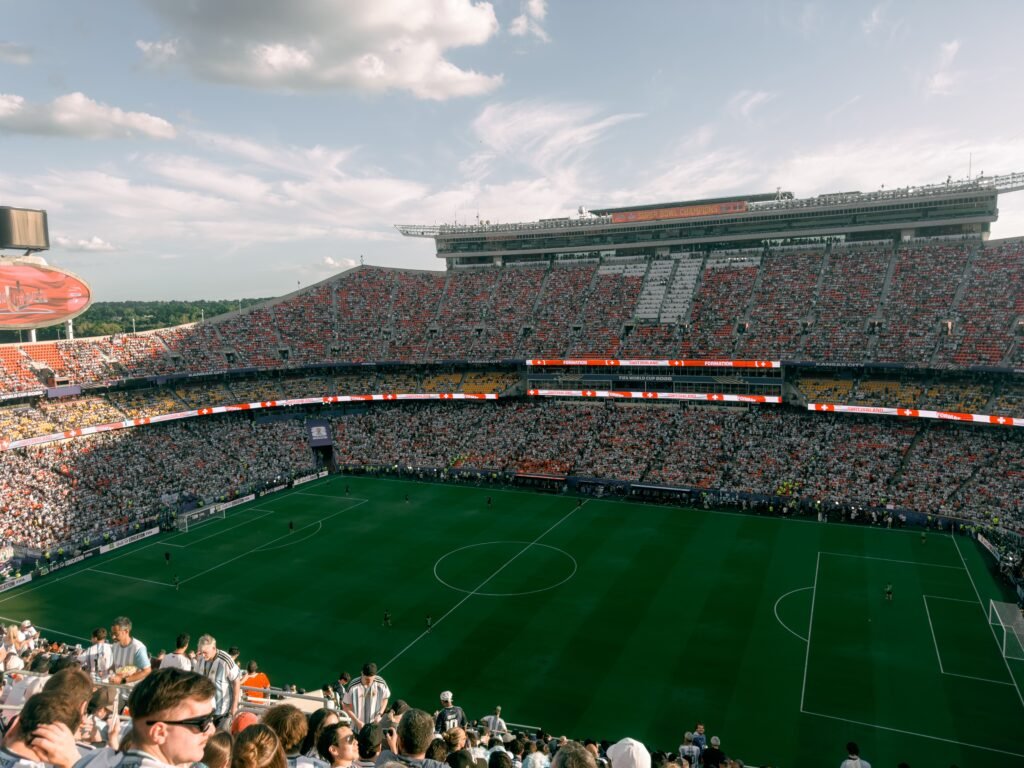
Throughout football history, several countries have been prevented from competing in World Cup qualification or the tournament itself because of suspensions, political conflicts, discrimination, government interference, or violations of FIFA regulations.
Some exclusions lasted only a few months. Others kept national teams away from international football for years. In many cases, the reasons extended far beyond football, showing how closely the sport can intersect with politics, governance, and international events.
While many fans assume World Cup qualification is decided entirely by results on the field, history tells a different story. FIFA’s regulations mean that administrative decisions, legal disputes, and geopolitical events can sometimes determine whether a nation is allowed to participate at all.
This article explains every major FIFA World Cup suspension, why FIFA excluded each country, how FIFA reaches these decisions, and what happens to players when their national team is unable to compete.
Can FIFA Really Ban Countries From the World Cup?
The short answer is yes, but the process is often misunderstood.
Contrary to popular belief, FIFA does not directly govern countries or national governments. Instead, it governs national football associations, which are responsible for organizing football within each member nation.
Every association that wants to participate in FIFA competitions, including the FIFA World Cup, must comply with the organization’s statutes. These rules cover everything from governance and elections to financial management and independence from political influence.
When a football association seriously breaches those rules, FIFA can suspend or expel that association from membership.
Once FIFA suspends an association, it immediately loses the right to participate in FIFA competitions.. That includes:
- FIFA World Cup qualifiers
- FIFA World Cup tournaments
- Youth World Cups
- FIFA Club competitions involving the association
- International friendlies recognized by FIFA
In practical terms, a suspension means the country’s national teams cannot play official international matches until FIFA lifts the sanction.
Is FIFA banning a country or its football association?
This distinction is important.
Media reports often say that a country has been “banned from the World Cup.” Technically, FIFA is suspending the country’s football association, not the nation itself.
For example, when FIFA suspended the Pakistan Football Federation in 2021 because of governance disputes, Pakistan as a country was not sanctioned by FIFA. Instead, its football association lost its membership rights until the governance issues were resolved.
The same principle has applied to suspensions involving Nigeria, Kenya, Zimbabwe, and several other nations over the past two decades.
However, for supporters and players, the practical outcome is identical. If the association cannot participate, the national team cannot compete in World Cup qualification or any other FIFA tournament.
When does FIFA suspend an association?
FIFA typically reserves suspensions for serious breaches of its statutes rather than minor administrative mistakes.
Common reasons include:
- Government interference in football administration
- Failure to hold legitimate federation elections
- Court orders affecting football governance
- Financial or administrative crises
- Discrimination or violations of FIFA’s anti-discrimination principles
- International sanctions or exceptional geopolitical circumstances
Not every dispute leads to suspension. FIFA usually works with national associations to resolve problems before taking disciplinary action.
In many cases, suspensions are lifted once the association complies with FIFA’s requirements. Others, particularly those linked to wider political issues, can remain in place for years.
Have countries ever missed the FIFA World Cup because of a suspension?
Yes.
Several national teams have been unable to compete in World Cup qualification after their football associations were suspended. Others were excluded from tournaments because of broader international circumstances.
Some of the best-known examples include:
- South Africa, excluded during the apartheid era.
- Yugoslavia, removed from international competitions following United Nations sanctions in the early 1990s.
- Russia, suspended from FIFA competitions after the invasion of Ukraine in 2022.
- Mexico, banned from the 1990 FIFA World Cup after fielding over-age players in a FIFA youth tournament.
Each case followed a different path, and the reasons behind them varied considerably. Some involved politics, others governance, and some resulted from breaches of FIFA competition rules rather than wider national events.
Understanding those differences is essential because there is no single type of FIFA suspension. Each decision reflects a unique combination of football regulations, international law, and the specific circumstances surrounding the association involved.
Why FIFA Suspends National Teams
Not every FIFA suspension makes global headlines like Russia’s or South Africa’s. In reality, most suspensions happen because a national football association breaches FIFA’s governance rules rather than anything that occurs on the pitch.
FIFA’s statutes require every member association to operate independently, manage its affairs responsibly, and uphold the organization’s regulations. When those standards are no longer met, FIFA has the authority to suspend the association until the issues are resolved.
Although every case is unique, most suspensions fall into four broad categories.
Government Interference
Government interference is by far the most common reason FIFA suspends national football associations.
Under Article 14 and Article 19 of the FIFA Statutes, member associations must manage their affairs independently and remain free from undue influence by governments or third parties. While national governments can support football through funding or infrastructure, they cannot appoint federation officials, dissolve elected boards, or directly control football administration.
FIFA argues that political interference threatens the integrity of the sport. If governments could control football associations, elections, disciplinary decisions, and even national team selections could become political rather than sporting matters.
Because of this, FIFA has adopted a strict approach over the past two decades.
Nigeria
One of the most well-known examples came in 2014.
Following Nigeria’s elimination from the FIFA World Cup in Brazil, a Nigerian court removed officials from the Nigeria Football Federation and appointed a government-backed administrator.
FIFA considered the court’s intervention a violation of its statutes and suspended the federation. The suspension was lifted only days later after the government reversed its actions and restored the elected leadership.
Although Nigeria ultimately avoided missing competitive fixtures, the incident demonstrated how quickly FIFA is prepared to act when political authorities intervene.
Pakistan
Pakistan has faced multiple FIFA suspensions in recent years because of disputes over who should control the Pakistan Football Federation.
Rather than concerns about sporting performance, the suspensions centred on governance battles, constitutional disagreements, and the implementation of FIFA-backed reforms.
Each suspension was lifted only after FIFA concluded that the federation had regained sufficient operational independence.
Kenya
Kenya’s suspension in 2022 followed the government’s decision to disband the Football Kenya Federation over allegations of financial mismanagement.
Although the government’s investigation focused on governance concerns, FIFA viewed the dissolution of the federation as direct interference in football administration.
The suspension remained in place until Kenya restored an independent football leadership recognised by FIFA.
Zimbabwe
Zimbabwe experienced a similar situation when the country’s Sports and Recreation Commission suspended the Zimbabwe Football Association’s executive committee.
FIFA responded by suspending the association, arguing that outside authorities had unlawfully interfered in its governance.
The suspension was eventually lifted after governance reforms and discussions between FIFA and the national authorities.
Why FIFA takes such a strict approach
At first glance, FIFA’s position can seem contradictory. Governments often investigate football federations because of corruption, financial mismanagement, or administrative failures.
However, FIFA believes allowing governments to remove football officials whenever disputes arise would undermine the independence of football associations worldwide.
Instead, FIFA prefers governance problems to be addressed through its own disciplinary mechanisms and recognised electoral processes rather than political intervention.
That policy has occasionally attracted criticism, but it remains one of the organisation’s core principles.
War and International Sanctions
Politics rarely enters football as directly as it does during armed conflict.
Unlike governance disputes, suspensions linked to war usually involve international sanctions, security concerns, or decisions taken alongside other sporting bodies.
These cases are relatively rare, but they have shaped World Cup history in significant ways.
Yugoslavia
One of the clearest examples came in 1992 during the breakup of Yugoslavia.
As conflict spread across the Balkans, the United Nations imposed sanctions through UN Security Council Resolution 757. Those sanctions prevented Yugoslavia from participating in international sporting events.
FIFA and UEFA subsequently excluded the national team from their competitions.
Yugoslavia had already qualified for UEFA Euro 1992 but was removed just days before the tournament, with Denmark taking its place and famously going on to win the championship.
The sanctions also prevented Yugoslavia from participating in qualification for the 1994 FIFA World Cup.
Although FIFA implemented the sporting suspension, the wider context was international law rather than a football governance dispute.
Russia
Russia’s suspension following the invasion of Ukraine in 2022 represents another exceptional case.
Initially, FIFA announced that Russia could continue playing under the name “Football Union of Russia” without its flag or national anthem. However, widespread opposition from other national associations and subsequent legal developments prompted FIFA and UEFA to suspend Russian teams from international competitions.
As a result, Russia was excluded from qualification for the 2022 FIFA World Cup play-offs and has remained absent from FIFA competitions while the suspension continues.
Unlike most FIFA disciplinary actions, Russia’s exclusion reflected an unprecedented geopolitical situation involving multiple sporting organisations and international pressure.
Why these cases are different
Government interference cases focus on whether a football association follows FIFA’s governance rules.
War-related suspensions involve far broader considerations, including international sanctions, security risks, diplomatic relations, and decisions made in coordination with other sporting bodies.
Because of those complexities, these cases remain among the rarest in FIFA’s history.
Discrimination and Apartheid
No FIFA suspension has had a greater historical impact than South Africa’s exclusion during the apartheid era.
Unlike governance disputes or political conflicts, South Africa’s case centred on institutionalised racial discrimination.
From 1948 onwards, apartheid laws legally enforced racial segregation across South African society, including sport. Football competitions were divided along racial lines, preventing players of different races from competing together.
FIFA initially attempted to encourage reform, but the lack of meaningful progress eventually led to increasingly severe sanctions.
South Africa was suspended from FIFA in 1961 before being formally expelled in 1976 after years of international pressure and growing opposition to apartheid within world football.
The exclusion kept South African national teams out of FIFA competitions for decades.
Only after apartheid ended and a unified South African Football Association was established did FIFA readmit the country in 1992.
South Africa’s return became one of football’s most powerful symbols of reconciliation and remains one of the defining moments in FIFA’s history.
Governance Failures
Not every suspension involves politics or discrimination.
Sometimes the problem lies within the football association itself.
Financial instability, disputed elections, constitutional conflicts, or prolonged administrative deadlock can leave a federation unable to function according to FIFA’s statutes.
In these situations, FIFA may suspend the association until governance standards are restored.
Recent suspensions involving countries such as Pakistan demonstrate that internal governance failures can have consequences just as serious as government interference.
While the specific circumstances differ from one federation to another, FIFA generally looks for the same outcomes before lifting a suspension:
- A democratically elected leadership recognised under FIFA statutes.
- Independence from political or third-party control.
- Compliance with FIFA’s governance requirements.
- Stable administration capable of running domestic and international football.
Most modern FIFA suspensions fall into this category. Rather than punishing results on the pitch, they are intended to protect the governance structure that underpins international football.
Understanding these different reasons also makes the historical record much clearer. Not every country has been suspended for the same reason, and treating all FIFA bans as identical oversimplifies a complex part of football history.
Countries Banned from FIFA World Cup: The Full List
South Africa
Why was South Africa suspended?
South Africa’s exclusion from international football stemmed from the country’s apartheid system, which legally enforced racial segregation from 1948 onwards.
At the time, football itself was divided along racial lines. Separate associations represented different racial groups, and mixed-race national teams were not permitted. This directly conflicted with FIFA’s principles of non-discrimination and increasingly isolated South Africa from the international football community.
Following years of pressure from newly independent African nations and growing opposition within FIFA, South Africa was suspended in 1961.
The suspension eventually became a formal expulsion in 1976 after repeated failures to dismantle apartheid-era sporting structures.
Years affected
Suspended: 1961. Expelled from FIFA: 1976. Readmitted: 1992.
World Cups missed
Because of its long exclusion, South Africa missed qualification for multiple FIFA World Cups, including 1962, 1966, 1970, 1974, 1978, 1982, 1986, and 1990.
The country returned to international football only after apartheid ended and FIFA recognised a unified South African Football Association.
South Africa later qualified for the 1998 and 2002 FIFA World Cups before hosting the tournament in 2010 — the first World Cup ever held on African soil.
How did the suspension end?
Political reform, not football results, made South Africa’s return possible.
Following the dismantling of apartheid and the creation of a single non-racial football association, FIFA reinstated South Africa in 1992.
People widely viewed the return as one of the defining moments in modern sports governance, and it symbolised South Africa’s reintegration into the international community.
Why South Africa Became FIFA’s Defining Suspension
South Africa’s exclusion remains the longest and most historically significant suspension in FIFA history.
Unlike most modern bans, it was not about governance or administrative disputes. It reflected football’s role in the global campaign against apartheid and demonstrated that FIFA could use sporting sanctions to oppose systematic discrimination.
Yugoslavia
Why was Yugoslavia excluded?
Unlike South Africa, Yugoslavia’s exclusion resulted from international conflict rather than FIFA disciplinary action alone.
During the breakup of Yugoslavia in the early 1990s, the United Nations imposed sanctions through Security Council Resolution 757 in response to the wars in the Balkans.
Because those sanctions prohibited participation in international sporting events, FIFA and UEFA removed Yugoslavia from their competitions.
Years affected
Suspended: 1992. Returned: Mid-1990s after sanctions were lifted and football administration was reorganised under the Federal Republic of Yugoslavia.
World Cups missed
The sanctions prevented Yugoslavia from participating in qualification for the 1994 FIFA World Cup.
Although separate successor nations later competed independently, the original Yugoslav national team never returned.
How did the suspension end?
The sporting ban ended only after international sanctions were eased and political circumstances changed.
By then, Yugoslavia as a state had effectively ceased to exist in its previous form, with several independent national teams emerging over the following years.
When International Sanctions Reached Football
Yugoslavia remains one of the clearest examples of football being affected by international law.
FIFA did not suspend the country because of football governance. Instead, it enforced wider United Nations sanctions that extended across multiple international sports.
The case also serves as a reminder that geopolitical events can sometimes reshape international football far more dramatically than anything that happens on the pitch.
Russia
Why was Russia suspended?
Russia’s suspension followed the country’s invasion of Ukraine in February 2022.
Initially, FIFA announced that Russian teams could continue competing under the name Football Union of Russia, without the national flag or anthem.
However, several national associations refused to play against Russia, while UEFA also announced disciplinary measures. Within days, FIFA and UEFA jointly suspended Russian clubs and national teams from their competitions pending further developments.
The Court of Arbitration for Sport (CAS) later upheld the suspension after Russia challenged the decision.
Years affected
Suspended: 2022. Current status: Suspension remains in effect for FIFA and UEFA competitions at the time of writing.
World Cups missed
Russia was excluded from the 2022 FIFA World Cup qualification play-offs, ending its hopes of reaching the tournament in Qatar.
The suspension has also prevented participation in subsequent FIFA competitions while it remains active.
How did the suspension happen?
Unlike many previous FIFA disciplinary cases, Russia’s exclusion was influenced by several factors: the military conflict in Ukraine, decisions by UEFA, refusals from other national teams to play Russia, and broader international sporting sanctions.
The situation differed significantly from governance-related suspensions because it involved exceptional geopolitical circumstances.
A New Model for Geopolitical Suspensions
Russia’s suspension demonstrated how quickly international football can respond to major global events.
It also highlighted the increasingly coordinated approach taken by FIFA, UEFA and other international sporting organisations during periods of geopolitical crisis.
Unlike most suspensions, this was not about football administration. It reflected broader international developments that extended well beyond sport.
These three cases are among the most significant in FIFA history, but they are far from the only countries to have faced World Cup exclusion.
Some nations were suspended because of governance disputes. Others were banned for breaking FIFA competition rules. One of the most famous examples is Mexico, whose actions at youth level unexpectedly led to exclusion from the 1990 FIFA World Cup.
Mexico
Why was Mexico banned?
Mexico’s exclusion from the 1990 FIFA World Cup had nothing to do with politics or government interference. Instead, it resulted from one of the most famous eligibility scandals in football history.
The controversy became known as the “Cachirules” scandal. During qualification for the 1989 FIFA World Youth Championship (now the FIFA U-20 World Cup), the Mexican Football Federation fielded four players who exceeded the tournament’s age limit. Investigations revealed that birth records had been falsified to make the players eligible.
Although the offence occurred in a youth competition, FIFA concluded that the federation had seriously violated its competition regulations.
Years affected
Suspended: 1988. Ban lifted: 1990.
World Cups missed
1990 FIFA World Cup (Italy). Mexico were prohibited from entering the qualification campaign altogether.
How did the ban end?
The suspension expired after FIFA’s disciplinary period ended. Mexico reformed its administrative procedures and returned to international competition, later qualifying for the 1994 FIFA World Cup.
Why a Youth Tournament Cost Mexico a Senior World Cup
Mexico’s ban remains unique because it shows FIFA’s disciplinary powers extend beyond governance issues and political disputes.
A breach of competition rules at youth level ultimately cost one of CONCACAF’s strongest teams a place at the senior World Cup.
It also reinforced FIFA’s position that age fraud and player eligibility violations undermine the integrity of international competitions.
Kuwait
Why was Kuwait suspended?
Kuwait was suspended by FIFA multiple times because of government interference in the country’s football federation.
The most significant suspension began in October 2015, when FIFA ruled that Kuwait’s sports law allowed the government to influence the Kuwait Football Association (KFA), violating FIFA’s requirement that national associations remain independent from political control.
FIFA maintained that football federations must be free to elect their own officials and manage their affairs without external interference. Since Kuwait’s legislation gave government authorities powers over sporting bodies, FIFA imposed a suspension until those laws were amended.
Years affected
2015–2017 (major suspension). Earlier temporary suspensions also occurred in 2007 and 2008 over similar governance disputes.
World Cups affected
The suspension prevented Kuwait from participating in qualification for the 2018 FIFA World Cup. It also ruled Kuwaiti clubs and national teams out of other FIFA and AFC competitions during the suspension.
How did the suspension end?
In December 2017, FIFA lifted the suspension after Kuwait introduced legislative reforms that addressed the governance concerns raised by FIFA. The Kuwait Football Association was subsequently reinstated, allowing its national teams and clubs to return to international competition.
Why it matters
Kuwait’s case became one of FIFA’s clearest modern examples of enforcing its principle of football independence. Unlike suspensions linked to war or discrimination, this case focused entirely on governance. It also showed that even established football nations can lose the right to compete internationally if their football associations are no longer considered autonomous.
Chile
Why was Chile suspended?
Chile’s suspension followed one of the most controversial incidents in World Cup qualifying history.
During a 1990 FIFA World Cup qualifier against Brazil at the Maracanã Stadium, Chilean goalkeeper Roberto Rojas collapsed after a firework landed near him.
At first, Chile claimed a flare thrown from the crowd had seriously injured the goalkeeper and refused to continue the match.
However, FIFA’s investigation uncovered a different story.
Video evidence and medical examinations showed that the flare had landed nearby without making contact. Rojas had secretly concealed a razor blade inside his glove and deliberately cut his own forehead to simulate an injury.
The incident became known as the Maracanazo scandal.
Years affected
Suspended: 1989. Ban lifted: Early 1990s.
World Cups missed
1994 FIFA World Cup qualification. FIFA excluded Chile from the qualifying campaign as part of its disciplinary measures.
How did the suspension end?
FIFA eventually lifted the federation’s suspension after the disciplinary period ended.
Roberto Rojas received a lifetime ban from football, although FIFA later granted him an amnesty in 2001.
The Lasting Legacy of the Maracanazo Scandal
The Maracanazo remains one of football’s most infamous examples of sporting deception.
It also demonstrated FIFA’s willingness to impose severe sanctions when attempts were made to manipulate international competitions.
Pakistan
Why was Pakistan suspended?
Pakistan has experienced multiple FIFA suspensions during the past decade because of governance disputes within the Pakistan Football Federation (PFF).
Unlike Mexico or Chile, the issue had nothing to do with results or player misconduct.
Instead, disagreements over the federation’s constitution, disputed leadership, and third-party control repeatedly prevented the PFF from operating according to FIFA’s statutes.
FIFA suspended the federation in 2017, 2021, and 2025.
Each suspension followed disputes over who legally controlled the federation and whether the federation had implemented FIFA-backed governance reforms.
Years affected
Several suspensions occurred between 2017 and 2025, although most lasted only until FIFA’s conditions were satisfied.
World Cups missed
Pakistan has never qualified for a FIFA World Cup, but each suspension prevented the national teams from participating in FIFA competitions during the relevant period.
How did the suspensions end?
FIFA lifted each suspension only after it concluded that the Pakistan Football Federation had regained operational independence and accepted governance reforms consistent with FIFA’s statutes.
Why Governance Became the Real Issue
Pakistan illustrates the type of suspension FIFA now issues most frequently.
Modern FIFA sanctions are far more likely to arise from governance failures than from dramatic political events or competition scandals.
Nigeria
Why was Nigeria suspended?
Nigeria’s suspension in 2014 followed government intervention in the Nigeria Football Federation after the country’s elimination from the FIFA World Cup in Brazil.
A Nigerian court removed elected football officials and appointed an administrator to oversee the federation.
FIFA regarded this as direct government interference in football governance.
Years affected
Suspended: July 2014. Reinstated: July 2014. The suspension lasted only a matter of days.
World Cups missed
None. Nigeria resolved the dispute before it affected World Cup qualification or other major FIFA competitions.
How did the suspension end?
The government reversed its actions and restored the federation’s elected leadership.
FIFA immediately lifted the suspension.
A Warning Against Government Intervention
Although brief, Nigeria’s suspension demonstrated how quickly FIFA is prepared to intervene when governments interfere with football associations.
It also became an important precedent for later governance cases across Africa and Asia.
Kenya
Why was Kenya suspended?
In February 2022, the Kenyan government dissolved the Football Kenya Federation following investigations into alleged financial irregularities.
FIFA argued that replacing an elected federation with government-appointed officials violated its statutes on association independence.
Years affected
Suspended: 2022. Reinstated: 2024.
World Cups missed
Kenya remained unable to participate in official FIFA competitions during the suspension.
How did the suspension end?
Following negotiations with FIFA and reforms to football governance, FIFA lifted the suspension after the association restored independent football administration.
Financial Investigations vs Football Independence
Kenya reinforces FIFA’s long-standing position that governments cannot remove football administrators, even when investigations involve legitimate governance concerns.
Zimbabwe
Why was Zimbabwe suspended?
Zimbabwe’s suspension followed the Sports and Recreation Commission’s decision to suspend the executive committee of the Zimbabwe Football Association (ZIFA).
FIFA viewed the move as third-party interference in the affairs of a member association.
Years affected
Suspended: 2022. Reinstated: 2023.
World Cups missed
Zimbabwe missed participation in FIFA competitions while the suspension remained in force.
How did the suspension end?
FIFA restored Zimbabwe’s membership after governance reforms and discussions with national authorities resolved the dispute.
Another Test of FIFA’s Independence Rules
Zimbabwe’s case closely mirrors several recent FIFA suspensions.
Rather than punishing sporting failures, FIFA focused on protecting the independence of its member association.
Indonesia
Why was Indonesia suspended?
Indonesia has experienced FIFA suspensions on more than one occasion, but the most significant came in 2015.
The country’s Ministry of Youth and Sports suspended the Football Association of Indonesia (PSSI) following a dispute over the management of domestic football.
FIFA regarded the government’s intervention as a breach of its statutes and suspended Indonesia from international football.
Years affected
Suspended: 2015. Reinstated: 2016.
World Cups missed
Indonesia was unable to participate in FIFA competitions during the suspension, although it did not affect a realistic World Cup qualification campaign.
How did the suspension end?
The Indonesian government lifted its sanctions against the PSSI, allowing FIFA to restore the federation’s membership in 2016.
FIFA Applies the Same Rules to Every Association
Indonesia demonstrates that FIFA applies the same governance principles regardless of a nation’s footballing stature.
Whether the association belongs to a traditional World Cup contender or an emerging football nation, government interference is treated as a serious breach of FIFA’s rules.
These examples show that FIFA suspensions are not confined to one continent or one type of offence. Some resulted from political conflict, others from governance disputes, and a few from breaches of competition regulations.
Among all of them, however, one case stands apart. South Africa’s exclusion lasted decades, reshaped international sport, and became one of the most significant examples of football influencing global politics.
South Africa: The Most Significant FIFA World Cup Ban
Most modern suspensions involve governance disputes that last months or, at most, a few years. South Africa’s exclusion lasted more than three decades and became one of the most influential examples of sport being used to challenge institutional discrimination.
It wasn’t simply a football decision. It reflected a global movement that increasingly viewed sporting isolation as a way to pressure governments into political change.
Football Under Apartheid
Apartheid officially became South African government policy in 1948, enforcing racial segregation across every aspect of society, including education, housing, public services, and sport.
Rather than operating under a single national association, the country had separate football bodies based on race. Black, white, Indian, and mixed-race players competed in different structures, and representative teams were selected accordingly.
This directly conflicted with FIFA’s principle that football should be open to everyone regardless of race, ethnicity, or background.
During the 1950s, FIFA repeatedly urged South African football authorities to create a unified, non-racial association. Those efforts made little progress.
As international opposition to apartheid grew, patience inside FIFA began to run out.
FIFA’s First Response
In 1961, FIFA suspended South Africa after concluding that its football administration failed to comply with the organisation’s anti-discrimination principles.
The suspension was intended to encourage reform rather than permanently remove the country from international football.
However, meaningful change never came.
Over the following years, FIFA received increasing pressure from newly independent African nations, Asian associations, and anti-apartheid campaigners, all of whom argued that South Africa should not remain part of international football while racial segregation continued.
It became a question of whether FIFA’s commitment to equality had practical meaning.
Expulsion from FIFA
The situation reached a turning point in 1976.
After years of failed negotiations and continued apartheid policies, FIFA formally expelled South Africa from membership.
Expulsion is considerably more severe than suspension.
While a suspension can usually be lifted once specific conditions are met, expulsion removes an association from FIFA altogether. Rejoining requires a formal application and approval by FIFA’s Congress.
For South Africa, this meant complete isolation from FIFA competitions.
The national team could not enter World Cup qualification.
Its youth teams disappeared from international tournaments.
Club football also became increasingly isolated as sporting organisations around the world adopted similar sanctions.
The Human Cost
Statistics alone cannot explain the impact of South Africa’s exclusion.
Entire generations of footballers lost the opportunity to represent their country on the international stage.
Players who spent their careers during the 1960s, 1970s and 1980s never had the chance to compete in FIFA World Cup qualifiers or other major international tournaments, regardless of their individual talent.
For many supporters, international football became something watched from afar rather than experienced firsthand.
The absence also slowed the country’s football development.
Without regular competition against other nations, South African players missed valuable experience, while coaches and administrators became increasingly disconnected from tactical and organisational developments elsewhere in world football.
International Pressure Beyond FIFA
FIFA was not acting in isolation.
Throughout the 1960s, 1970s and 1980s, sporting boycotts became a key part of the international campaign against apartheid.
South Africa faced exclusion across multiple sports, including cricket, rugby, athletics and the Olympic Games.
Many governments supported these measures, while athletes from around the world refused to compete against South African teams.
Although historians continue to debate the precise impact of sporting sanctions, there is broad agreement that they contributed to South Africa’s growing international isolation.
Football became one part of a much wider movement calling for political change.
The Return to International Football
The end of apartheid transformed South African football.
As political reforms gathered pace in the early 1990s, previously divided football organisations merged to form the South African Football Association (SAFA), creating a single governing body recognised by FIFA.
With a unified federation in place, FIFA officially readmitted South Africa in 1992.
The return was celebrated across the football world.
After more than 30 years away, South Africa could once again compete in international football.
The national team quickly embraced the opportunity.
Just four years later, Bafana Bafana won the 1996 Africa Cup of Nations on home soil, one of the most remarkable achievements in African football history.
The team then qualified for its first FIFA World Cup in 1998, followed by another appearance in 2002.
In 2010, South Africa reached another milestone by becoming the first African nation to host the FIFA World Cup.
The tournament represented far more than a sporting event.
For many South Africans, it symbolised the country’s journey from international isolation to full participation in the global sporting community.
Why South Africa’s Case Still Matters
South Africa’s exclusion remains unlike any other FIFA suspension.
Most modern sanctions focus on governance failures or administrative disputes. They are designed to protect the independence of football associations and are usually resolved once specific conditions are met.
South Africa’s ban addressed something much broader.
It challenged a political system built on racial discrimination and demonstrated that football could not remain completely separate from major human rights issues.
The case also shaped FIFA’s modern identity.
Today, the organisation’s statutes place equality, inclusion, and non-discrimination at the centre of international football governance. While debates continue about how consistently those principles are applied, South Africa’s exclusion remains the clearest historical example of FIFA using its authority to oppose systemic discrimination.
More than sixty years after the initial suspension, it is still the benchmark against which every major FIFA ban is compared.
South Africa’s story shows why FIFA suspensions are about far more than disciplinary rules. They reflect how football intersects with law, politics, governance and society itself.
FIFA vs UEFA vs IOC: What’s the Difference?
FIFA, UEFA and the IOC each have the power to suspend national teams, but they govern different competitions and make independent decisions.
| Organization | Governs | Can Suspend National Teams? | Examples |
|---|---|---|---|
| FIFA | World football | Yes | World Cup, World Cup qualifiers |
| UEFA | European football | Yes | European Championship, Champions League administration |
| IOC | Olympic Games | Yes | Olympic football tournaments |
Russia is a recent example.
Following the invasion of Ukraine in 2022, FIFA suspended Russia from its competitions, including the World Cup qualifying playoffs. UEFA also suspended Russian clubs and national teams from European competitions, while the International Olympic Committee recommended restrictions on Russian participation in international sport.
Because these governing bodies operate separately, sanctions do not always occur simultaneously or under identical rules.
Timeline of Countries Banned from FIFA World Cup
| Year | Country | Reason | Competition Affected |
|---|---|---|---|
| 1961 | South Africa | Apartheid and racial discrimination | World Cup qualification |
| 1976 | South Africa expelled | Continued apartheid policies | All FIFA competitions |
| 1992 | Yugoslavia | UN sanctions during Balkan conflict | 1994 World Cup qualifiers |
| 2014 | Nigeria | Government interference | Temporary suspension |
| 2015 | Kuwait | Government interference | World Cup qualifiers |
| 2017 | Pakistan | Third-party control of federation | FIFA competitions |
| 2021 | Pakistan | Governance dispute | FIFA competitions |
| 2022 | Kenya | Government interference | FIFA competitions |
| 2022 | Zimbabwe | Government interference | FIFA competitions |
| 2022 | Russia | Suspension following invasion of Ukraine | 2022 World Cup qualifiers |
Political issues such as apartheid or international conflict largely caused early suspensions. In recent years, however, FIFA has intervened more frequently because of governance failures and government interference within national football associations.
Common Misconceptions About FIFA World Cup Bans
Is a FIFA suspension the same as banning a country?
No.
FIFA suspends football associations rather than countries themselves. The practical outcome may look similar because the national team cannot compete, but the legal distinction matters.
Can club teams still play?
Usually, yes.
A suspension affecting a national association does not automatically prevent clubs from competing unless separate sanctions are imposed by FIFA or a confederation such as UEFA.
Can suspended countries return?
Yes.
Most FIFA suspensions are temporary.
FIFA reinstates associations once they meet its requirements, which often involve restoring independent governance or resolving administrative disputes.
Nigeria, Pakistan, Kuwait and several others have all returned after satisfying FIFA’s conditions.
Does FIFA ban governments?
No.
FIFA has no authority over governments.
Instead, it regulates football associations. When governments interfere with those associations in ways that breach FIFA statutes, FIFA responds by suspending the association.
Are suspensions always political?
No.
Political conflicts receive the most media attention, but governance issues, rather than international politics, actually cause most modern FIFA suspensions.
Could More Countries Be Banned From FIFA World Cup?
Government intervention continues to be the most common trigger, particularly when political authorities attempt to influence elections, dismiss federation officials or interfere with football administration.
Geopolitical conflicts also remain unpredictable.
The suspension of Russia demonstrated that major international events can affect football when broader sanctions and security concerns come into play.
At the same time, FIFA has strengthened its governance standards over the past two decades. Member associations are expected to meet clear requirements relating to independence, transparency and democratic elections.
That does not mean suspensions will become more frequent.
Instead, it reflects FIFA’s willingness to intervene when those standards are breached.
Frequently Asked Questions
Has any country ever been permanently banned from the FIFA World Cup?
No country has received a permanent World Cup ban.
South Africa’s exclusion lasted decades because of apartheid, but FIFA eventually readmitted it after political reforms.
Which country missed the most World Cups because of a FIFA ban?
South Africa missed multiple World Cup cycles due to apartheid, making it the most significant and longest-running FIFA exclusion in football history.
Why was Russia banned from the World Cup?
Russia was suspended following the country’s invasion of Ukraine in 2022. FIFA and UEFA both imposed sanctions that prevented the men’s national team from competing in international tournaments.
Can FIFA suspend countries during World Cup qualifying?
Yes.
If FIFA suspends a national association while qualification is taking place, it becomes ineligible to participate until FIFA lifts the suspension.
Can suspended players still play for clubs?
In most cases, yes.
A FIFA suspension primarily affects national team participation. Players generally remain eligible to play for their clubs unless other sanctions apply.
Final Thoughts
People often describe the FIFA World Cup as football’s greatest stage, but reaching it depends on more than performances on the pitch.
Throughout history, national teams have missed the tournament because of apartheid, war, government interference and failures in football governance. While each case has its own circumstances, they all reinforce the same principle: FIFA expects its member associations to operate independently and according to its statutes.
South Africa’s exclusion showed how football can become part of a broader struggle for human rights. Yugoslavia’s suspension reflected the impact of international conflict. More recent cases involving Pakistan, Kenya and Zimbabwe demonstrate that governance remains one of FIFA’s highest priorities.
For supporters, these stories serve as a reminder that goals and qualification campaigns and decisions made far beyond the touchline shape the World Cup.
The cases in this article show there is no single path to a World Cup suspension. FIFA excluded South Africa because of apartheid, Mexico because of an age-fraud scandal, and Pakistan and Kenya because it judged their football associations were no longer operating independently. Different causes led to the same outcome: national teams lost the chance to compete on football’s biggest stage. That is why people judge every FIFA suspension not only by what happened on the pitch, but by what happened away from it.