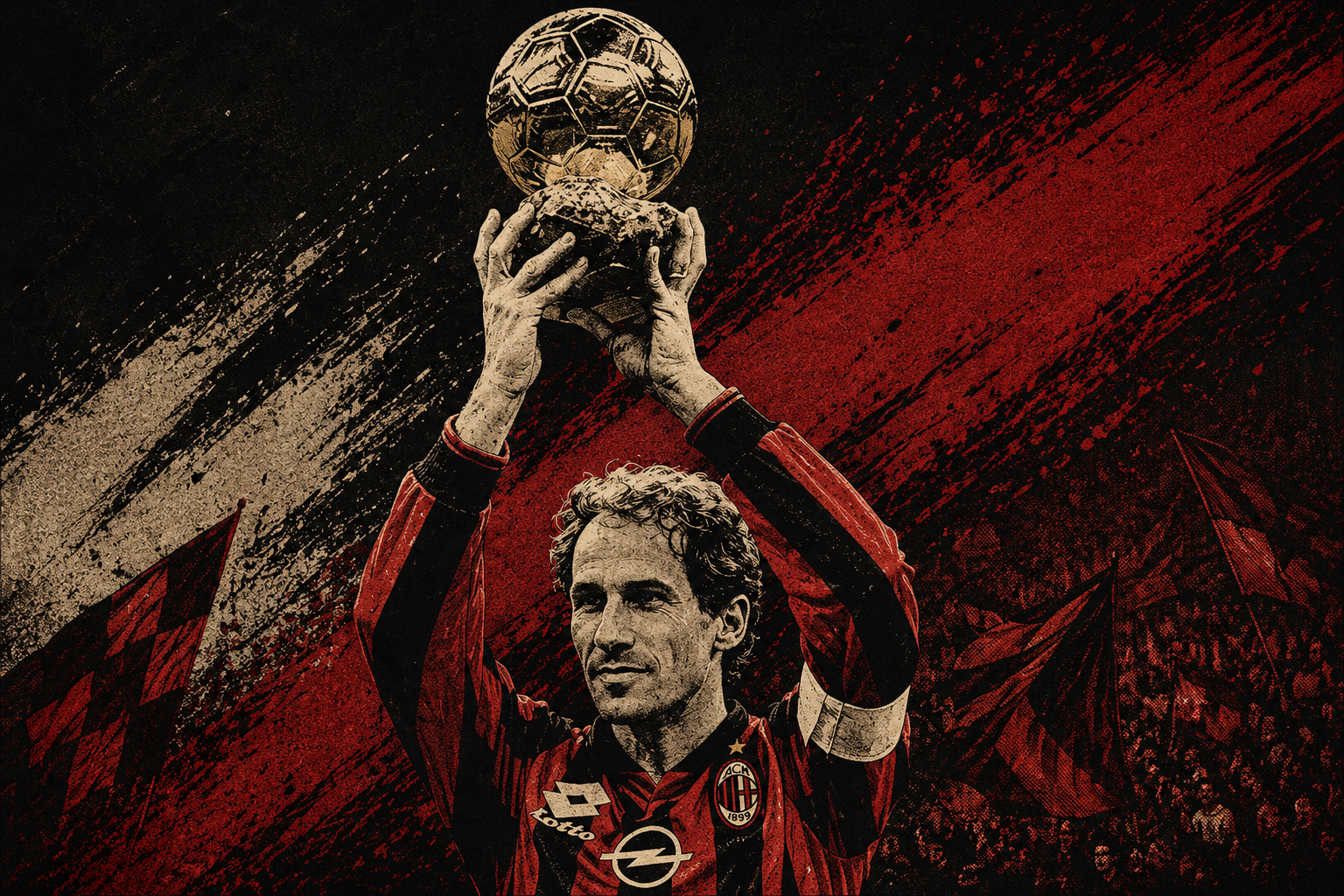
The history of AC Milan lost one of its defining figures on Friday as legendary captain and Honorary Vice-President Franco Baresi died at the age of 66.
In announcing his passing, the club did not simply mourn one of its greatest footballers. Its official statement reflected the loss of a man whose influence had become inseparable from Milan itself.
“The entire history of AC Milan is in tears following the passing of Franco Baresi,” the club said, adding that his “example and integrity will be forever etched into the Club’s DNA, just as his iconic number six shirt is.” Milan also described Baresi as the player who embodied the heart and soul of the Rossoneri, extending condolences to his family while affirming that his spirit would continue to guide the club’s future.
Those words carried particular weight because Baresi was far more than a former captain. Across two decades as a player and later as Honorary Vice-President, he became one of the defining figures in AC Milan’s history.
His honours alone would secure his place among football’s immortals. Yet the emotion surrounding his passing stems from something less tangible than trophies. Baresi came to represent the values Milan wanted the world to associate with the club: loyalty, discipline, intelligence and understated leadership.
That is why the club’s farewell read less like the announcement of a death and more like the loss of someone woven into its story.
Why AC Milan’s tribute reflects Franco Baresi’s legacy
Football clubs often describe their greatest players as legends, icons or symbols. AC Milan chose different language.
“The entire history of AC Milan is in tears following the passing of Franco Baresi.”
It is a striking sentence because it places Baresi alongside every era of the club rather than within one successful generation. Milan’s statement repeatedly returned to the idea that his influence could not be confined to the years he spent wearing the shirt. Instead, it insisted that his example and integrity remain “forever etched into the Club’s DNA,” linking his character directly with the retired No. 6 shirt that has become one of the club’s enduring symbols.
The tribute also described him as “the heart and soul of AC Milan” and “The Rossonero of the Century in eternal glory.” Those descriptions reveal how the club viewed Baresi. He was remembered not simply because he won trophies or captained successful teams, but because he became the standard against which generations of Milan players were measured.
That distinction explains why the statement resonated so strongly across football.
Supporters were not simply mourning one of the finest defenders the game has produced. They were mourning a man whose story became inseparable from Milan’s own. Every triumph under Arrigo Sacchi and Fabio Capello, every difficult year before that revival and every generation of defenders who followed carried traces of Baresi’s influence.
By framing their tribute around identity rather than achievement, Milan captured what made his relationship with the club unique. Great players help define successful teams. Very few come to define an institution.
From Travagliato to Milanello: Franco Baresi’s journey
Long before he became the face of AC Milan, Franco Baresi was a boy from Travagliato, a town in the province of Brescia around 80 kilometres east of Milan. His journey towards becoming one of football’s finest defenders began amid personal hardship that shaped both his character and career.
After suffering family tragedy at a young age, Baresi found purpose in football. He joined AC Milan’s youth academy, beginning a relationship with the club that would last for the rest of his life. From Milanello, he progressed rapidly through the youth ranks, displaying a maturity and tactical understanding that belied his age.
His senior debut came under Nils Liedholm, who recognised qualities that extended beyond conventional defensive ability. Baresi’s composure, positional intelligence and calmness in possession marked him out as a player capable of seeing the game differently.
Success followed almost immediately.
Still a teenager, he helped Milan win the Serie A title, collecting the first Scudetto of what would become one of the most decorated careers in the club’s history. It was an early glimpse of a player who would spend the next two decades at the centre of Milan’s fortunes.
At that stage, however, few could have imagined that the defining chapters of his story would not be shaped by immediate success, but by the choices he made when success disappeared.
The years that defined him
A young champion
Baresi’s introduction to senior football suggested AC Milan had discovered a special talent, but few could have predicted the scale of his influence.
Winning the Scudetto while still in his teens confirmed his potential, yet his early years were about much more than collecting medals. They laid the foundations for a style of defending that would eventually redefine the position. While many defenders relied on strength or aggression, Baresi’s greatest asset was his ability to anticipate danger before it developed.
His reading of the game allowed him to compensate for a lack of imposing physical stature. Rather than chasing forwards into desperate challenges, he preferred to control space, organise teammates and force opponents into mistakes. Those qualities would later become synonymous with both his career and AC Milan’s football.
Even as a young player, teammates recognised his composure and authority. They would become increasingly valuable as the club entered one of the most turbulent periods in its history.
Loyalty through Serie B
Every great football club has players who define successful eras. Far fewer are defined by what they do when success disappears.
For Baresi, that moment arrived when Milan suffered relegation to Serie B. At a time when one of Italy’s brightest young defenders could easily have sought opportunities elsewhere, he chose to stay.
That decision became one of the defining moments of his career.
Remaining with Milan during its darkest years transformed the relationship between player and supporters. Loyalty was no longer something discussed in abstract terms; it had been demonstrated when it mattered most. While others might have viewed relegation as an opportunity to leave, Baresi saw it as a responsibility to help restore the club.
The trust he earned during that period never faded.
As Milan fought its way back, Baresi assumed increasing responsibility both on and off the pitch. He eventually inherited the captaincy, a role that suited his personality perfectly. He was not an emotional or theatrical leader. Instead, he led through consistency, discipline and relentless professionalism.
Those difficult seasons shaped the values that would later underpin Milan’s greatest successes.
By the time European glory arrived, supporters already regarded Baresi as one of their own. His reputation had not been built solely on victories. It had been forged during adversity, when loyalty demanded genuine sacrifice.
That is why Milan’s official tribute placed such emphasis on his integrity. The qualities it celebrated had been visible long before the trophies returned.
The Sacchi revolution
If loyalty made Franco Baresi the emotional leader of AC Milan, Arrigo Sacchi’s arrival elevated him into one of football’s defining defenders.
Sacchi transformed European football with an aggressive, collective style built around pressing, positional discipline and an exceptionally high defensive line. It demanded complete synchronisation across the team. Any hesitation or poor decision could leave enormous spaces behind the defence.
At the centre of that system stood Baresi.
As captain and defensive organiser, he became the reference point for one of the finest back lines football has seen. Every movement of Milan’s defence revolved around his judgement. He dictated when the line advanced, when the offside trap was sprung and when the team compressed space to suffocate opponents.
What appeared effortless to spectators required extraordinary intelligence.
Baresi constantly processed the positioning of teammates, the movement of opposition forwards and the trajectory of the ball, often making decisions fractions of a second before everyone else. Rather than reacting to attacks, he anticipated them.
That anticipation became the foundation of Milan’s dominance.
The Rossoneri won successive European Cups and established themselves among the leading club sides of their era. Their defensive organisation became as admired as their attacking quality, influencing coaches and defenders around the world.
Sacchi undoubtedly revolutionised Milan’s football.
Baresi gave that revolution its authority on the pitch.
Sacchi provided the tactical blueprint. Baresi ensured it functioned under the pressure of elite competition.
The partnership between coach and captain became one of football’s defining collaborations. Their shared commitment to discipline, intelligence and collective responsibility reshaped expectations of what defenders could achieve.
Many outstanding centre-backs have excelled through physical dominance. Baresi showed that organisation, anticipation and leadership could be just as decisive.
Most great defenders rescue their teams from danger.
Baresi specialised in making sure the danger never existed.
Capello and the final peak
When Fabio Capello succeeded Sacchi, Milan evolved without abandoning the principles that had made them Europe’s benchmark.
Baresi remained the constant.
As captain, he guided another outstanding side that combined defensive excellence with remarkable consistency. Capello’s Milan became known as the “Invincibles”, dominating Serie A while maintaining the organisational discipline that had become the club’s hallmark.
One of the defining nights of that era came in the 1994 UEFA Champions League final.
Against a heavily favoured Barcelona side, Milan produced one of the competition’s greatest performances, winning 4-0 to reclaim the European crown. It was another demonstration of the collective discipline and defensive authority that Baresi had spent years cultivating.
That same year also highlighted another aspect of his character.
Despite recovering from injury in time for the FIFA World Cup in the United States, Baresi returned to captain Italy on the biggest stage, underlining both his resilience and his importance to the national side.
His club career continued with further domestic success before he eventually brought an extraordinary playing journey to an end after winning his final Serie A title.
Retirement closed one chapter but not his relationship with Milan.
By then, Baresi had become far more than a legendary defender. He had become the figure who embodied the standards the club sought to uphold.
Why Franco Baresi’s legacy stands apart
Statistics explain Franco Baresi’s greatness. They do not fully explain why he continues to be spoken about with such admiration.
Long after his retirement, coaches, teammates and opponents remembered him not only for his performances but for the example he set. He changed expectations of what a captain, defender and professional could be.
Leadership sat at the heart of that reputation.
Baresi was never the loudest player on the pitch. He rarely relied on dramatic gestures or emotional outbursts. Instead, he led through calm authority, consistency and the standards he set every day. His teammates understood what was expected because he demanded the same level of discipline from himself.
His intelligence elevated him even further.
Rather than relying on pace or physical dominance, Baresi mastered positioning, anticipation and timing. He consistently arrived in the right place before danger fully developed, making defending appear almost effortless. His ability to organise those around him meant Milan often defended as a single, perfectly coordinated unit rather than a collection of individuals.
His loyalty also set him apart.
Choosing to remain with Milan during relegation to Serie B strengthened an emotional bond with supporters that trophies alone could never create. It reinforced the values the club later celebrated in its tribute.
His influence extended beyond his own career.
Among those who developed alongside him was Paolo Maldini, who would become another iconic Milan captain. Baresi’s professionalism, attention to detail and commitment to collective responsibility helped establish standards that endured long after his retirement.
Taken together, those qualities explain why Baresi is remembered differently from most defenders.
He did not simply win matches.
He helped shape the culture of AC Milan.
Why AC Milan retired Franco Baresi’s No. 6
When AC Milan retired the No. 6 shirt following Baresi’s retirement, the gesture represented far more than recognition of an outstanding career.
For Milan supporters, the number became inseparable from his loyalty, leadership and decades of service to the club. It reflected not only the player he had been but the example he continued to provide after retirement.
That symbolism explains why the shirt featured so prominently in Milan’s tribute following his death.
The club described it as an iconic number that would forever remind future generations of the man who wore it with distinction.
More than a piece of memorabilia, No. 6 became a reminder that some players leave behind values as well as achievements.
Football pays tribute to Franco Baresi
The response to Baresi’s passing quickly showed that his influence extended far beyond San Siro.
FIFA, UEFA and the Italian Football Federation were among the organisations to honour one of Italy’s most respected football figures, while clubs across Europe also paid tribute to a player whose reputation had long reached beyond national borders.
Traditional rivals Inter and Juventus joined the tributes, as did European giants Barcelona and Real Madrid.
Some of the most personal messages came from those who knew him best. Paolo Maldini remembered the captain who helped shape both his career and Milan’s culture, while Dino Zoff and Javier Zanetti joined many others in paying tribute to a figure admired across generations.
Together, those tributes reflected the breadth of Baresi’s influence. Respect for him extended well beyond the medals he collected, recognising the character and professionalism that defined his career.
His legacy
Franco Baresi’s influence can still be felt across multiple levels of the game.
At AC Milan, he remains a reference point for leadership. His loyalty during difficult years, his captaincy throughout one of the club’s greatest eras and his continued service after retirement left future generations with more than a collection of honours. They inherited an example.
For Italian football, Baresi became one of the defining symbols of defensive intelligence.
His composure, positional awareness and tactical understanding demonstrated that defending was as much about anticipation and organisation as physical confrontation. Alongside his achievements with the national team, he helped reinforce Italy’s reputation for producing elite defenders.
His influence also reached beyond his own era.
Modern centre-backs are expected to organise defensive structures, initiate attacks and understand increasingly sophisticated tactical systems. Baresi embodied many of those qualities decades before they became standard expectations, influencing coaches, defenders and analysts who continue to study Milan’s defensive excellence.
Football continues to evolve.
Baresi remains one of its enduring reference points.
Conclusion
When AC Milan announced Franco Baresi’s death, the club did more than mourn one of its greatest players.
It mourned someone whose story had become inseparable from its own.
Its tribute spoke of a man whose example and integrity would remain forever etched into the club’s DNA. After tracing his journey from academy prospect to legendary captain, revolutionary defender and Honorary Vice-President, those words carry even greater meaning.
Baresi’s legacy was never defined solely by trophies or individual honours. It was built on loyalty when Milan needed him most, leadership that inspired teammates, intelligence that transformed the art of defending and professionalism that shaped those who followed.
Football will remember Franco Baresi as one of the game’s greatest defenders.
AC Milan will remember the man who became the standard by which generations of Rossoneri have measured themselves.