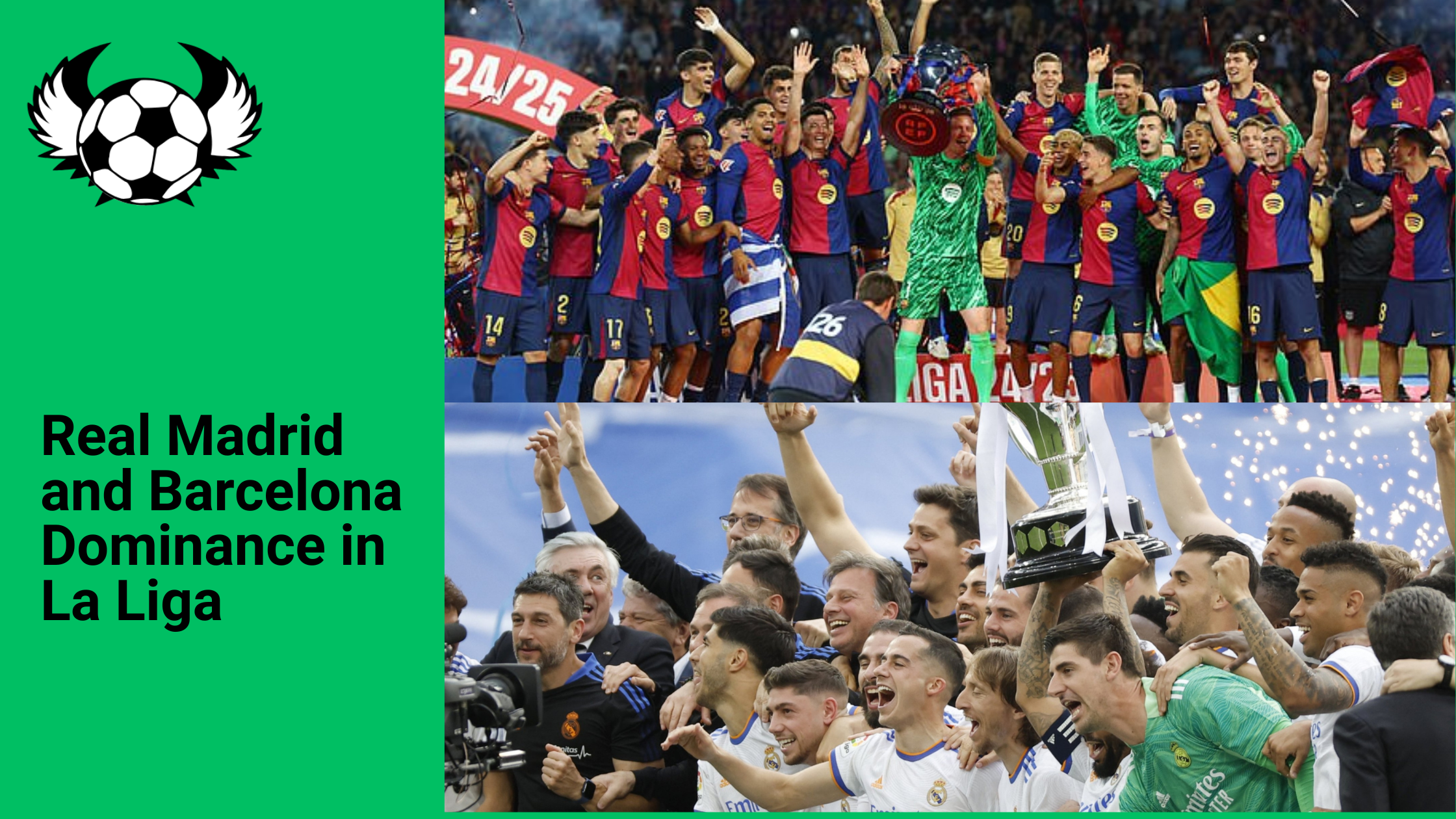
Real Madrid Barcelona dominance has defined La Liga for over a decade, turning Spain’s title race into one of football’s most predictable competitions.
Embed from Getty ImagesFor decades, La Liga has been marketed as one of the most competitive leagues in world football. In reality, Spanish football has slowly become one of the most predictable. Season after season, the title race comes down to the same two names: Real Madrid and Barcelona.
The dominance of Real Madrid and Barcelona in La Liga is no longer a phase. It is a system that has shaped Spanish football, narrowed competition, and made domestic success for other clubs feel temporary at best.
The Two-Team Reality of La Liga
La Liga is often described as a “big league,” but in truth, it is a two-team competition. Real Madrid and Barcelona have won the vast majority of league titles over the last three decades, turning the championship into a familiar script.
While other European leagues have seen new champions emerge, Spanish football continues to revolve around the same rivalry. Every season begins with one question only: will it be Real Madrid or Barcelona?
This reality has made La Liga dominance synonymous with these two clubs alone.
How Real Madrid and Barcelona Control Domestic Titles
Real Madrid and Barcelona dominate La Liga because they control the key pillars of success: money, players, global appeal, and institutional power.
Their ability to attract world-class talent, even during financial downturns, keeps them ahead of domestic rivals. While other clubs must sell their best players to survive, Real Madrid and Barcelona buy to rebuild, ensuring that even transition seasons rarely become failures.
As a result, La Liga titles feel less earned through competition and more inherited through structure.
Financial Power and the Growing Gap in La Liga
The financial gap in La Liga is the engine behind this dominance. Broadcasting revenues, sponsorship deals, and global fanbases heavily favor Real Madrid and Barcelona.
Even after financial regulations and revenue-sharing reforms, the difference remains massive. Smaller clubs are forced into survival mode, while the two giants operate in a different economic reality.
This imbalance ensures that La Liga competitiveness never truly resets, no matter how well other teams are managed.
European Success That Reinforces Domestic Dominance
Real Madrid and Barcelona’s dominance in La Liga is reinforced by their European success. Champions League revenue, prestige, and exposure create a cycle that feeds domestic superiority.
European trophies increase global visibility, which increases revenue, which attracts better players, which then strengthens domestic squads. This loop keeps Real Madrid and Barcelona far ahead of the rest of Spanish football.
Even when Barcelona struggled financially, their global pull remained intact.
Why Atlético Madrid Can’t Sustain a Title Challenge
Atlético Madrid are often presented as proof that La Liga is competitive. In reality, they are the exception that proves the rule.
Embed from Getty ImagesAtlético can challenge for a season, sometimes even win the title, but sustaining that challenge is nearly impossible. Squad depth, financial limitations, and constant player turnover prevent long-term dominance.
One title win does not change the structure. Real Madrid and Barcelona return stronger. Atlético are forced to reset.
Squad Depth, Star Power, and Rotation Advantage
Another reason Real Madrid and Barcelona dominate La Liga is squad depth. Injuries, fixture congestion, and European commitments hurt smaller teams far more.
While others weaken when rotating, Madrid and Barcelona simply rotate internationals. This advantage turns tight title races into slow, inevitable conclusions.
In La Liga, depth often matters more than tactics, and no one matches the big two.
Is La Liga’s Competitive Balance Beyond Repair?
The dominance of Real Madrid and Barcelona in La Liga raises an uncomfortable question: has Spanish football become too predictable?
Unless financial structures change drastically or broadcasting revenues are redistributed more evenly, the answer feels clear. La Liga will remain a two-horse race, with occasional interruptions rather than true competition.
For fans, predictability reduces excitement. For clubs, it reduces belief. And for La Liga, it threatens long-term global appeal.
Final Thought
This ongoing Real Madrid Barcelona dominance raises serious questions about La Liga’s competitive future. Real Madrid and Barcelona’s dominance in La Liga is not just about trophies. It is about control, structure, and inevitability. Until that changes, Spanish football will continue to feel less like a league and more like a recurring rivalry.
The question is no longer who will win La Liga, but whether La Liga can afford to stay this predictable.

One Comment on “Real Madrid and Barcelona’s Dominance in La Liga Has Made Spanish Football Predictable”